
Homalomena Care Guide
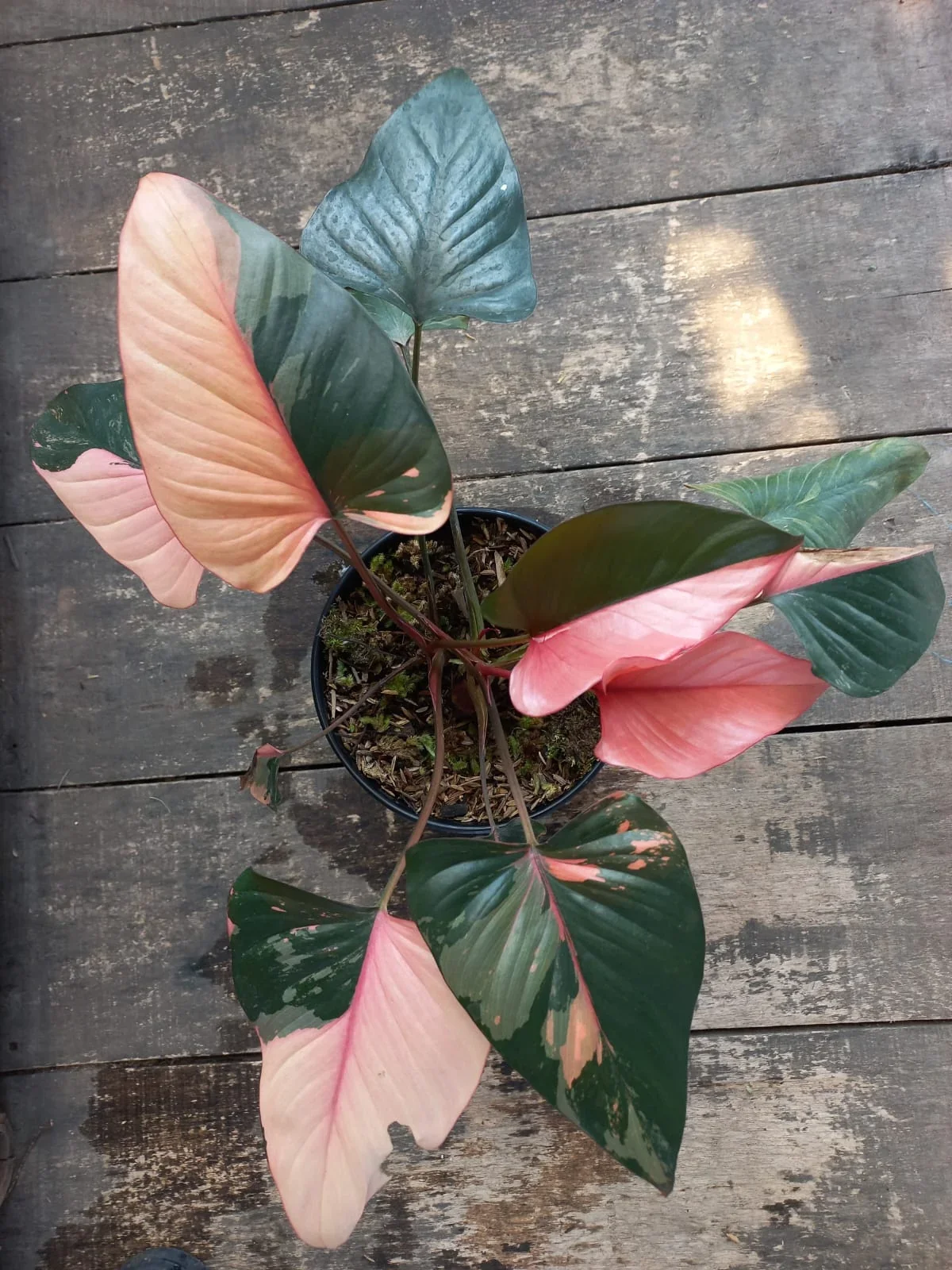
Homalomena species and cultivars
Includes Pink Diamond and other variegated Homalomena varieties
Homalomenas are tropical foliage plants related to Philodendrons and other aroids. They prefer warmth, humidity, bright filtered light, and soil that remains lightly moist without becoming waterlogged.
Light
Provide medium to bright, indirect light. Green varieties can tolerate medium light, but variegated plants such as Pink Diamond need brighter light to maintain their coloring.
Gentle morning sunlight is usually acceptable. Protect the foliage from intense afternoon sun, particularly the pale portions of variegated leaves.
Insufficient light can cause:
Weak or stretched growth
Smaller leaves
Loss of variegation
Soil remaining wet too long
Increased risk of root rot
Water
Water when the top one to two inches of soil feel dry.
Thoroughly soak the soil until excess drains from the container, then empty the saucer or decorative pot. Avoid frequent small drinks that moisten only the surface.
Homalomenas prefer more consistent moisture than many Philodendrons, but they should never remain in saturated soil. Reduce watering when growth slows during winter.
Humidity
Moderate to high humidity is preferred. A humidifier can help prevent dry edges and support healthy new growth.
Provide gentle airflow and avoid allowing water to remain on the leaves for extended periods.
Temperature
Maintain temperatures between approximately 65 and 85°F. Homalomenas are sensitive to cold conditions.
Protect them from:
Temperatures below approximately 60°F
Cold windows and exterior doors
Heating and cooling vents
Sudden temperature changes
Soil and Repotting
Use a loose, well-draining aroid mixture containing ingredients such as:
Indoor potting soil or coco coir
Orchid bark
Perlite or pumice
The container must have drainage holes. Repot when the roots fill the container or the soil begins draining poorly.
Move up by only one pot size. An oversized container can hold excessive moisture around the roots.
Fertilizing
Feed every two to four weeks during spring and summer with a balanced houseplant fertilizer diluted to half strength.
Reduce or stop feeding during fall and winter when growth slows. Avoid fertilizing a stressed plant or one with damaged roots.
Variegated Homalomena
Pink Diamond and other variegated Homalomenas need brighter indirect light than solid-green varieties.
The pale sections of their leaves contain less chlorophyll, so variegated plants may:
Grow more slowly
Need careful protection from strong sunlight
Require especially good lighting
Produce occasional solid-green growth
If an entirely green shoot begins dominating the plant, it can be removed to preserve the variegated appearance.
Common Problems
Yellow leaves: Commonly caused by excessive watering, poor drainage, insufficient light, or natural aging.
Brown edges: May indicate low humidity, inconsistent watering, fertilizer buildup, or root stress.
Drooping foliage: Check for dry soil, cold temperatures, saturated soil, or damaged roots.
Loss of variegation: Provide brighter indirect light.
Brown patches on pale sections: Usually caused by strong sunlight, extreme dryness, or physical damage.
Spider mites, mealybugs, scale, or thrips: Inspect the stems and leaf undersides regularly.
Pet Safety
Keep Homalomenas out of pets’ reach. Like many aroids, they contain calcium oxalate crystals that can cause mouth irritation, drooling, vomiting, or difficulty swallowing if chewed.
Contact a veterinarian or poison-control service if ingestion is suspected.
Mary Mae’s Quick Advice
Keep your Homalomena warm, give it filtered light, and water when the upper portion of the soil dries. Pink Diamond needs especially bright indirect light to maintain its variegation.
Website Details
Page title: Homalomena Care Guide
URL:
https://www.marymaegardens.com/blog/plant-care/homalomena
SEO title: Homalomena Care Guide | Mary Mae Gardens
Meta description: Learn how to care for Homalomena plants, including Pink Diamond and other variegated varieties, with guidance on light, watering, humidity, soil, and pet safety.
