
Super Dwarf Banana Care Guide
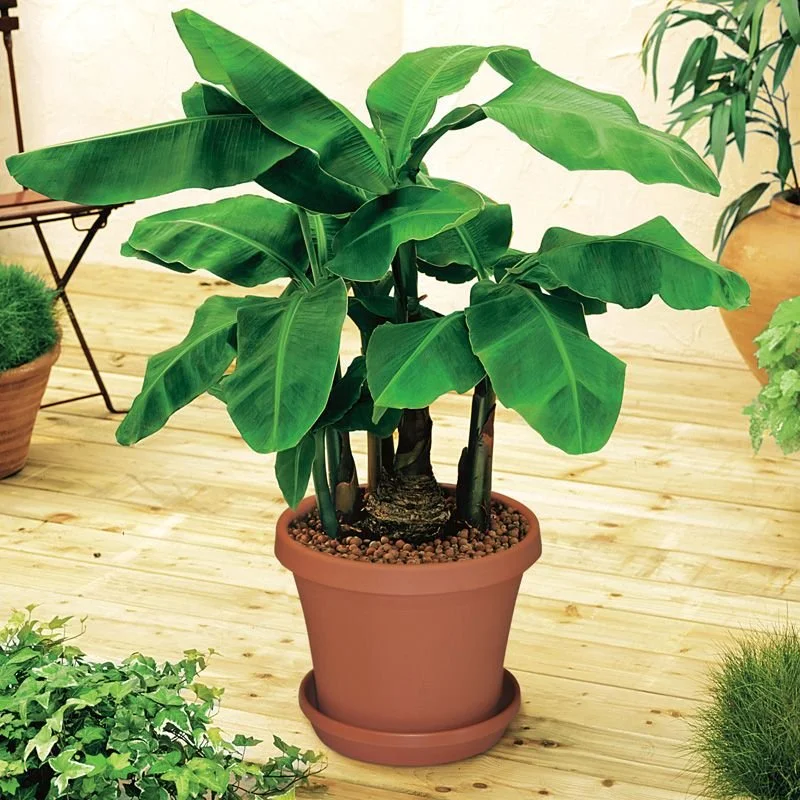
Super Dwarf Banana
Musa acuminata cultivar
The Super Dwarf Banana brings a bold tropical look indoors with its broad, paddle-shaped leaves. Despite its compact name, it can become a substantial plant under the right conditions and needs abundant light, warmth, water, and nutrients.
Quick Care
Light: Very bright light with several hours of direct sun
Water: Water when the top 1–2 inches feel dry
Humidity: Moderate to high
Temperature: 65–85°F
Soil: Rich, well-draining potting mix
Difficulty: Moderate
Pet safety: Non-toxic to cats and dogs
Light
Give your banana plant the brightest location available. Several hours of direct morning or late-day sun are beneficial. A south- or west-facing window is usually best indoors.
Introduce direct sunlight gradually to avoid burning leaves that were previously grown in lower light. Poor light results in weak growth, smaller leaves, and increased susceptibility to overwatering.
Water
Banana plants use more water than most common houseplants, especially during warm, bright weather.
Check the soil frequently.
Water when the top 1–2 inches feel dry.
Soak the soil thoroughly until water drains from the bottom.
Empty the saucer or decorative container.
Do not let the soil dry completely, but never leave the roots standing in water. Reduce watering during winter when growth slows.
Temperature and Humidity
Maintain temperatures between 65 and 85°F. Protect the plant from cold drafts and temperatures below approximately 55°F.
Banana plants appreciate moderate to high humidity. A humidifier is more effective than occasional misting. Keep the plant away from heating and cooling vents.
Soil and Repotting
Use a rich potting mix amended with perlite or bark to improve drainage. The container must have drainage holes.
Bananas grow quickly and may need repotting annually. Move the plant into a container only 1–2 inches wider at a time. An oversized pot can hold excessive moisture around the roots.
Fertilizing
Banana plants are heavy feeders. During spring and summer, apply a balanced liquid fertilizer at half strength every two to four weeks.
Reduce or stop fertilizing during fall and winter if the plant’s growth slows. Always apply fertilizer to moist soil to avoid root damage.
Leaf Care
Large banana leaves naturally collect dust. Wipe them gently with a damp cloth so they can receive as much light as possible.
Some splitting along the leaves is normal. Banana leaves tear naturally from movement, handling, and airflow and do not need to be removed unless they become mostly damaged or brown.
Will It Produce Bananas?
It is possible, but fruit production indoors is uncommon. The plant needs exceptional light, warmth, maturity, space, and consistent nutrition. It should primarily be sold as an ornamental foliage plant rather than a fruit-producing plant.
New shoots called pups may emerge from the soil. They can be left in place for a fuller appearance or separated once they develop their own roots.
Common Problems
Brown leaf edges: Usually caused by dry soil, low humidity, fertilizer buildup, or inconsistent watering.
Yellow leaves: One older yellow leaf can be normal. Multiple yellow leaves may indicate excessive watering, poor drainage, cold temperatures, or insufficient light.
Drooping or curling leaves: Check for dry soil, cold drafts, or excessive heat.
Long, weak growth: The plant needs substantially more light.
Spider mites: Fine webbing or pale stippling can indicate mites. Inspect the undersides of leaves regularly, especially during dry winter conditions.
Fungus gnats: Constantly wet soil can attract gnats. Allow the upper portion of the soil to dry before watering again.
Pet Safety
Banana plants are considered non-toxic to cats and dogs by the ASPCA. However, eating any plant material can still cause digestive upset, and damaged leaves may affect the plant’s appearance.
ASPCA Banana plant safety information
Mary Mae’s Best Advice
Put this plant directly in front of your brightest window. Most indoor banana problems blamed on watering are actually caused by insufficient light, which prevents the plant from using water efficiently.
