
Anthurium Care Guide
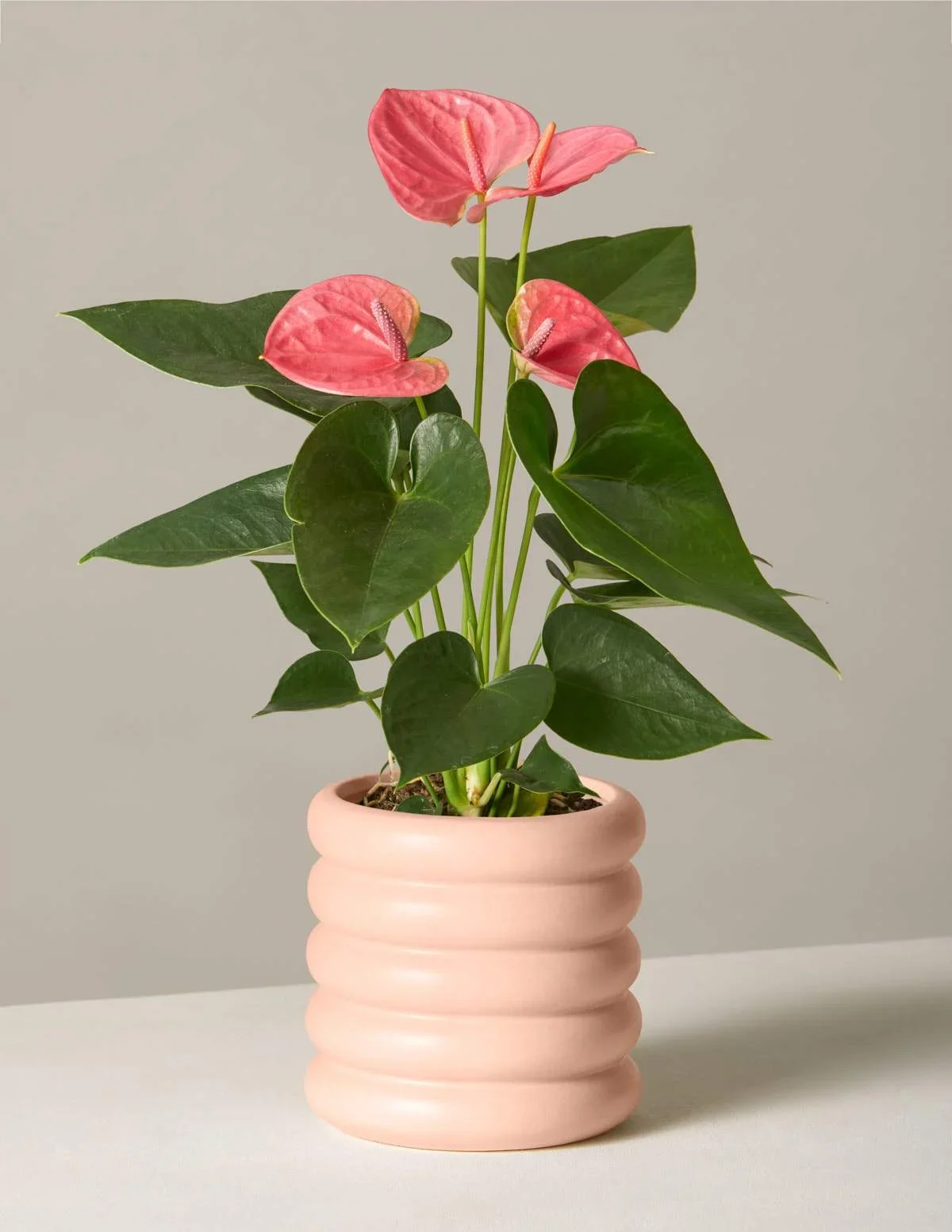
Anthurium andraeanum and related hybrids
Also called Flamingo Flower or Tailflower
Anthuriums are tropical houseplants known for glossy, heart-shaped leaves and colorful, long-lasting flower-like structures called spathes. With enough light and consistent care, they can bloom repeatedly throughout the year.
Quick Care
Light: Bright, indirect light
Water: Water when the top 1–2 inches feel dry
Humidity: Moderate to high
Temperature: 65–80°F
Soil: Chunky, well-draining mix
Difficulty: Moderate
Pet safety: Toxic to cats and dogs
Light
Provide bright, indirect light. A location near an east-facing window or a few feet back from a bright south- or west-facing window works well.
Too much direct sun can bleach or scorch the leaves. Too little light produces slow growth and few or no flowers.
Water
Anthuriums prefer consistent moisture but are vulnerable to root rot.
Check the soil before watering.
Water when the top 1–2 inches feel dry.
Soak the soil thoroughly until excess drains.
Empty the saucer or decorative container.
Water less frequently during winter when the plant grows more slowly. If possible, use filtered, distilled, or rainwater when local tap water causes repeated brown leaf tips.
Temperature and Humidity
Maintain temperatures between 65 and 80°F. Protect the plant from cold drafts, heating vents, and temperatures below approximately 55°F.
Anthuriums appreciate humidity above average household levels. A humidifier is the most reliable option. Good airflow is still necessary to discourage fungal problems.
Soil and Repotting
Use a loose, airy potting mix. A combination of indoor potting soil, orchid bark, and perlite works well.
The container must have drainage holes. Repot every one to two years or when roots become crowded, using a container only 1–2 inches wider.
Exposed roots near the soil surface are normal and do not necessarily need to be buried.
Fertilizing
During spring and summer, apply a balanced liquid houseplant fertilizer at one-quarter to half strength approximately once a month.
Reduce or stop fertilizing during winter if growth slows. Excessive fertilizer can damage the roots and cause brown leaf tips.
Encouraging Flowers
Provide plenty of bright, indirect light.
Maintain warm temperatures and moderate humidity.
Fertilize lightly during active growth.
Remove spent flowers at their base.
Avoid repeatedly moving the plant.
The colorful portion commonly called the flower is actually a modified leaf called a spathe. The small true flowers are clustered along the central spike, called the spadix.
Cleaning and Pruning
Wipe the glossy leaves gently with a damp cloth to remove dust. Avoid commercial leaf-shine products.
Remove yellow leaves and faded flowers using clean scissors. Cut each old stem near its base without damaging surrounding growth.
Common Problems
No flowers: The most likely cause is insufficient light. Excessive nitrogen fertilizer can also encourage leaves instead of blooms.
Yellow leaves: Often caused by excessive watering, poor drainage, or cold conditions.
Brown leaf tips: May indicate low humidity, inconsistent watering, fertilizer buildup, or sensitivity to minerals in tap water.
Brown or bleached patches: Usually caused by excessive direct sunlight.
Drooping: Check the soil. Both severe dryness and root damage from wet soil can cause wilting.
Spider mites or mealybugs: Inspect leaf undersides and stem joints for webbing, white residue, or sticky leaves.
Pet Safety
Anthuriums are not considered pet-safe. They contain insoluble calcium oxalate crystals that can cause intense mouth irritation, swelling, drooling, vomiting, and difficulty swallowing when chewed.
Keep the plant out of reach of pets and children. Contact a veterinarian if ingestion is suspected. ASPCA Anthurium safety information
Mary Mae’s Best Advice
If your anthurium looks healthy but will not bloom, it probably needs more light. Move it closer to a bright window before adding more fertilizer.
