
Silver Lace Fern Care Guide
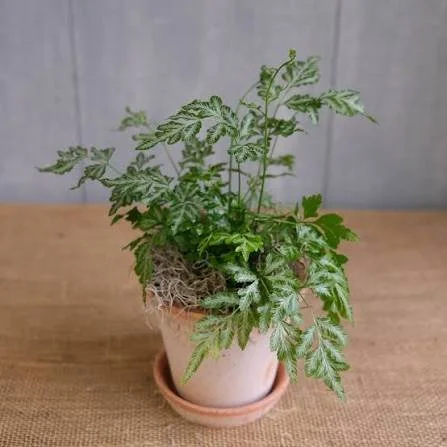
Silver Lace Fern
Pteris ensiformis ‘Evergemiensis’
Also called Silver Lace Brake Fern
The Silver Lace Fern is a compact tropical fern with delicate green fronds marked by bright silvery-white centers. It stays relatively small but requires consistent moisture and humidity.
Quick Care
Light: Medium to bright indirect light
Water: Keep lightly and consistently moist
Humidity: High
Temperature: 60–75°F
Soil: Moisture-retentive but well-draining mix
Difficulty: Moderate
Pet safety: Non-toxic to cats and dogs
Light
Provide medium to bright indirect light. An east-facing window or a location near a filtered south- or west-facing window works well.
Avoid intense direct sunlight, which can scorch the delicate fronds. Very low light can reduce the plant’s silver coloring and produce thin, weak growth.
Water
Silver Lace Ferns should not dry out completely.
Check the soil frequently.
Water when the surface begins to feel slightly dry.
Water thoroughly until excess drains.
Empty the saucer or decorative container.
Keep the soil evenly moist but not waterlogged. Extended dryness can quickly produce crispy fronds, while saturated soil can cause root rot.
Filtered, distilled, or rainwater may help if repeated brown tips develop from mineral-heavy tap water.
Temperature and Humidity
Maintain temperatures between 60 and 75°F. Protect the fern from cold drafts, hot air, and temperatures below approximately 55°F.
High humidity is important. A humidifier or bright bathroom is preferable to occasional misting. Keep the plant away from heating and cooling vents.
Humidity does not replace watering—the soil must still be checked regularly.
Soil and Repotting
Use a loose potting mix that holds some moisture while allowing excess water to drain. Standard indoor potting soil amended with peat or coco coir and perlite works well.
The container must have drainage holes. Repot when the plant becomes root-bound, increasing the pot by only about 1 inch.
Fertilizing
During spring and summer, apply a balanced liquid houseplant fertilizer at one-quarter to half strength every four to six weeks.
Reduce or stop fertilizing during winter. Fern roots can be sensitive to excessive fertilizer, so more is not better.
Grooming
Remove fully brown or damaged fronds by cutting them near the soil line with clean scissors.
Do not cut off healthy fronds simply because spores appear beneath them. Small brown lines or dots arranged regularly on the undersides of mature fronds may be normal spore structures rather than insects.
Common Problems
Crispy brown fronds: Usually caused by dry soil, low humidity, excessive sun, or mineral buildup.
Yellow fronds: Often indicates excessive watering, poor drainage, or naturally aging growth.
Pale or bleached areas: The plant may be receiving too much direct sunlight.
Wilting: Check the soil immediately. This fern can wilt quickly when dry, but chronically wet roots can cause similar symptoms.
Spider mites: Inspect for pale stippling and fine webbing, especially in hot, dry rooms.
Fungus gnats: Consistently moist soil can attract gnats. Avoid standing water and remove decaying plant material.
Pet Safety
Silver Table Ferns in the genus Pteris are considered non-toxic to cats and dogs by the ASPCA. Eating any plant material may still cause mild digestive upset.
ASPCA Silver Table Fern safety information
Mary Mae’s Best Advice
Do not let this fern dry out completely. Check it more frequently than your pothos or philodendrons, especially during winter when indoor heating lowers humidity.
