
Kangaroo Paw Fern Care Guide
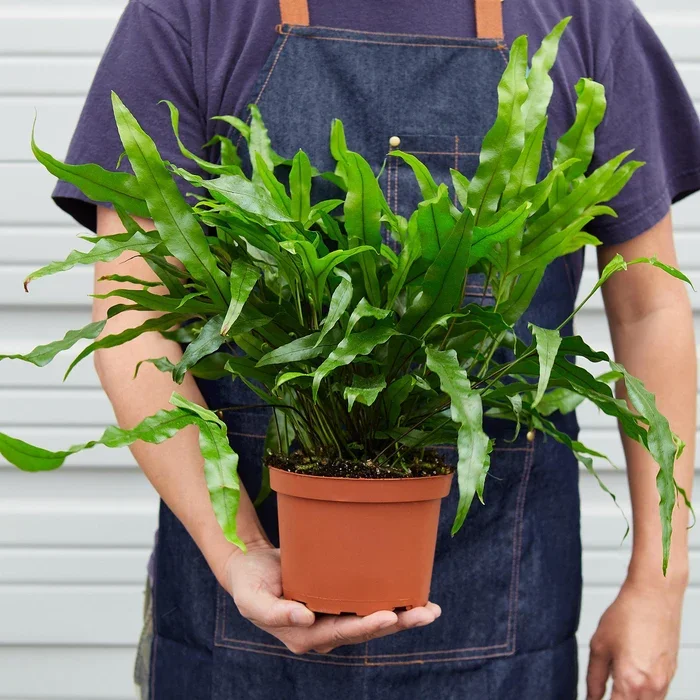
Kangaroo Paw Fern
Microsorum diversifolium
Also classified as Lecanopteris pustulata subsp. pustulata
The Kangaroo Paw Fern has glossy, irregularly lobed fronds resembling a kangaroo’s foot. Its creeping rhizomes create a full, spreading plant that works especially well in hanging baskets.
Quick Care
Light: Medium to bright indirect light
Water: Water when the soil surface begins to dry
Humidity: Moderate to high
Temperature: 60–75°F
Soil: Loose, well-draining potting mix
Difficulty: Easy to moderate
Pet safety: Generally considered non-toxic
Light
Provide medium to bright indirect light. A location near an east-facing window or behind a sheer curtain works well.
Avoid strong afternoon sunlight, which can scorch the fronds. The plant tolerates medium light better than many other ferns but grows more slowly in darker locations.
Water
Keep the soil lightly moist without keeping it saturated.
Check the soil before watering.
Water when the surface begins to feel dry.
Water thoroughly until excess drains.
Empty the saucer or decorative container.
The thick rhizomes allow the plant to tolerate brief periods of dryness better than more delicate ferns. However, repeated or prolonged dryness will cause brown tips and wilting.
Reduce watering during winter when growth slows.
Temperature and Humidity
Maintain temperatures between 60 and 75°F with humidity around 50% or higher when possible.
Keep the fern away from heating vents, cold drafts, and temperatures below approximately 55°F. A humidifier or bright bathroom can provide a suitable environment.
Soil and Repotting
Use a loose potting mix that drains well while retaining some moisture. Indoor potting soil mixed with orchid bark and perlite works well.
Repot when the container becomes crowded, moving up by only one pot size. This plant spreads through creeping rhizomes and may eventually grow over the edge of its pot.
Do not bury exposed rhizomes deeply. They naturally travel along or slightly above the soil surface.
Fertilizing
Apply a balanced liquid houseplant fertilizer at half strength once a month during spring and summer.
Reduce or stop fertilizing during fall and winter. Excessive fertilizer may cause brown tips or root damage.
Pruning and Division
Remove completely brown or damaged fronds at their base with clean scissors.
A mature plant can be divided by separating sections of rhizome that each have healthy roots and several fronds. Repot the divisions in fresh, lightly moist soil.
Spores Are Normal
Rows or clusters of brown bumps may appear on the undersides of mature fronds. These are usually spore-producing structures called sori—not insect eggs or disease.
Do not remove a healthy frond simply because spores are present.
Common Problems
Brown, crispy tips: Usually caused by dry soil, low humidity, excessive fertilizer, or too much sunlight.
Yellow fronds: May indicate excessive watering, poor drainage, or normal aging of older growth.
Drooping fronds: Often indicates dry soil, but check before watering because damaged roots can produce similar symptoms.
Soft or dark rhizomes: Possible rot caused by wet soil or burying the rhizomes too deeply.
Scale, mealybugs, or spider mites: Inspect the fronds and rhizomes for bumps, sticky residue, white material, or fine webbing.
Pet Safety
Kangaroo Paw Fern is generally considered non-toxic to cats and dogs. It is a true fern and is not related to toxic asparagus ferns.
However, it is not specifically included as an individual entry in the ASPCA plant database. Eating any plant material may also cause mild digestive upset. Customers with a pet that has chewed the plant should contact their veterinarian if symptoms develop.
NC State Kangaroo Paw Fern information
Mary Mae’s Best Advice
Allow the soil surface to begin drying before watering, but do not let the entire pot become bone-dry. Also, leave the creeping rhizomes at the soil surface instead of burying them.
