
Rubber Tree Care Guide
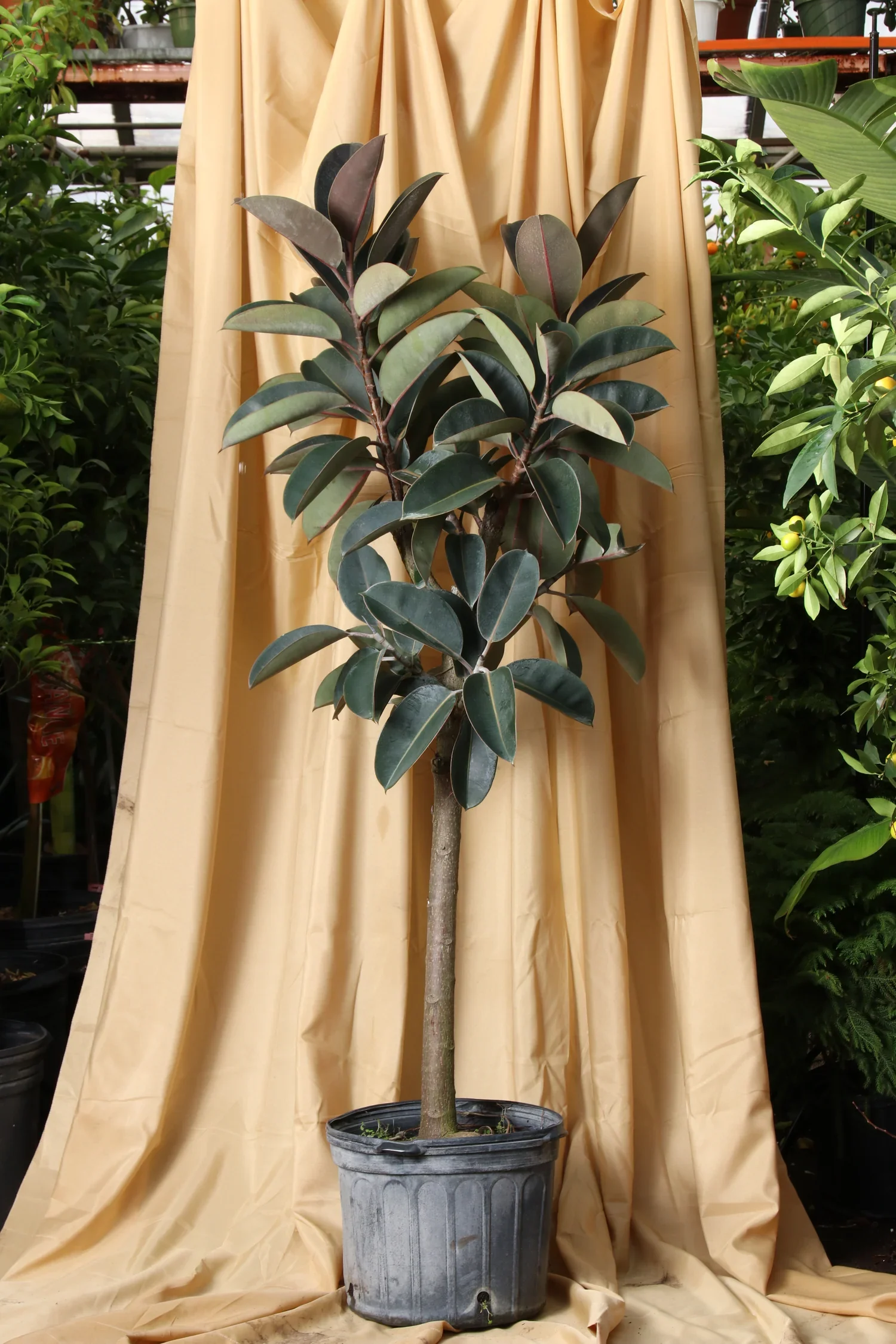
Ficus elastica cultivars
Covers Burgundy, Green, Tineke, Ruby, and other variegated Rubber Trees
Rubber Trees are upright tropical plants with thick, glossy foliage. Different cultivars produce green, burgundy, cream, pink, or multicolored leaves, but their basic care is similar.
Quick Care
Light: Medium to bright indirect light
Water: Water when the top 2 inches feel dry
Humidity: Average to moderate
Temperature: 65–80°F
Soil: Well-draining potting mix
Difficulty: Easy to moderate
Pet safety: Toxic to cats and dogs
Light
Provide bright, indirect light for the strongest growth and coloring.
Green Rubber Tree: Tolerates medium light
Burgundy: Needs bright light to maintain dark coloring
Tineke, Ruby, and other variegated types: Need bright indirect light to maintain variegation
Gentle morning sun is usually beneficial. Protect the plant from intense afternoon sun, especially variegated varieties whose pale leaf sections scorch more easily.
Rotate the pot every week or two for balanced growth.
Water
Rubber Trees tolerate slight dryness better than constantly wet soil.
Wait until the top 2 inches of soil feel dry.
Water thoroughly until excess drains.
Empty the saucer or decorative container.
Allow the soil to begin drying again.
Reduce watering during winter and in lower-light conditions. Avoid frequent small drinks; thoroughly water the entire root ball instead.
Temperature and Humidity
Maintain temperatures between 65 and 80°F. Protect the plant from temperatures below approximately 55°F, cold windows, exterior doors, and heating or cooling vents.
Average household humidity is usually adequate. Moderate humidity may help prevent brown edges, particularly on variegated leaves.
Soil and Repotting
Use a loose indoor potting mix amended with perlite or fine orchid bark. The container must have drainage holes.
Repot every one to two years or when roots become crowded. Choose a container only 1–2 inches wider than the current pot.
Fertilizing
During spring and summer, apply a balanced liquid houseplant fertilizer at half strength approximately once a month.
Reduce or stop fertilizing during fall and winter. Excessive fertilizer can damage the roots and cause brown leaf edges.
Pruning and Shaping
Rubber Trees naturally grow upward and may remain a single stem unless pruned. Cutting the growing tip during active growth can encourage branching.
Wear gloves when pruning. Cut stems release sticky white latex sap that may irritate the skin and eyes.
On variegated plants, remove any entirely green branches. Solid-green growth is more vigorous and may eventually dominate the plant.
Cleaning the Leaves
Wipe both sides of each leaf gently with a damp cloth. Clean foliage receives light more efficiently and makes pest inspection easier.
Avoid commercial leaf-shine products, oils, or milk.
Common Problems
Yellow lower leaves: Usually caused by excessive watering or poor drainage.
Leaf drop: May result from cold drafts, sudden environmental changes, severe dryness, or excessive watering.
Faded Burgundy coloring: Move the plant into brighter indirect light.
Loss of variegation: Variegated cultivars need brighter light. Remove entirely green branches.
Brown areas on pale leaf sections: Often caused by excessive sun, inconsistent watering, low humidity, or physical damage.
Small new leaves or weak growth: Usually caused by insufficient light or nutrition.
Scale, spider mites, or mealybugs: Inspect the stems and leaf undersides for bumps, webbing, white residue, or sticky surfaces.
Pet Safety
Rubber Trees are not considered pet-safe. Their sap and plant material can cause skin, mouth, and gastrointestinal irritation.
Keep the plant away from pets and children, and wear gloves when pruning. Contact a veterinarian if ingestion is suspected.
Do not confuse Ficus elastica with the pet-friendly American Rubber Plant, Peperomia obtusifolia. They are unrelated plants despite sharing a common name.
NC State Rubber Tree information
Mary Mae’s Best Advice
Let the top couple inches of soil dry before watering. Green varieties tolerate medium light, but Burgundy and variegated Rubber Trees need brighter indirect light to maintain their best coloring.
