
Aglaonema Care Guide
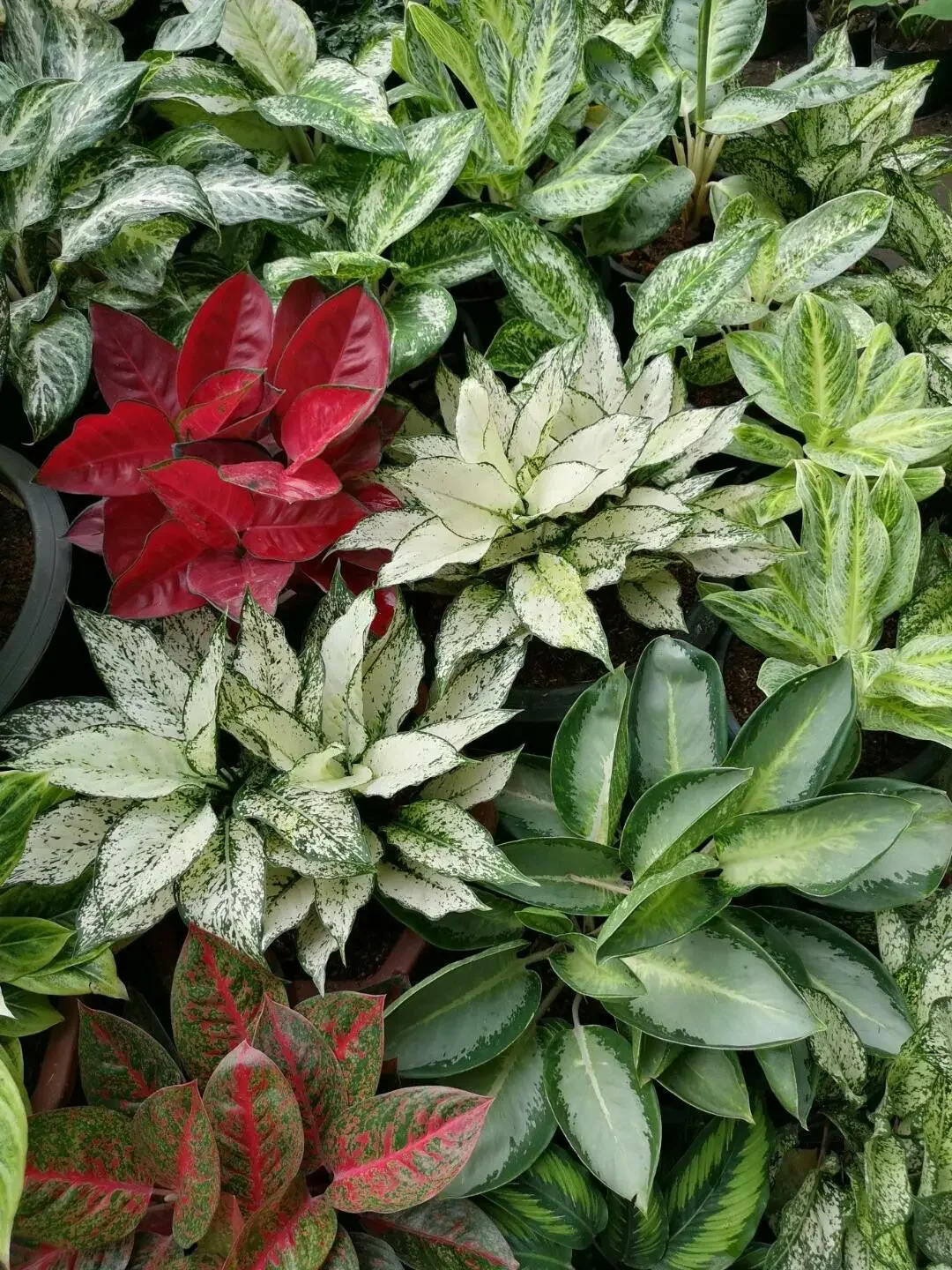
Aglaonema species and hybrids
Covers Silver Bay and Red Creta
Aglaonemas, commonly called Chinese Evergreens, are durable tropical houseplants known for their patterned foliage. Silver Bay has broad silver-and-green leaves, while Red Creta adds pink and red coloring.
Quick Care
Light: Low to bright indirect light
Water: Water when the top 1–2 inches feel dry
Humidity: Average to moderate
Temperature: 65–80°F
Soil: Loose, well-draining potting mix
Difficulty: Easy
Pet safety: Toxic to cats and dogs
Light
Silver Bay tolerates lower-light locations but grows best in medium to bright indirect light.
Red Creta needs brighter indirect light to maintain its strongest red and pink coloring. In insufficient light, its growth may slow and new foliage may become greener.
Avoid intense direct sunlight, which can scorch or bleach the leaves.
Water
Allow the upper portion of the soil to begin drying between waterings.
Check the top 1–2 inches of soil.
Water when that portion feels dry.
Water thoroughly until excess drains.
Empty the saucer or decorative container.
Reduce watering during winter or in lower-light locations. Aglaonemas tolerate slight dryness better than constantly saturated soil.
Temperature and Humidity
Maintain temperatures between 65 and 80°F. Aglaonemas are sensitive to cold and should be kept away from exterior doors, cold windows, and temperatures below approximately 60°F.
Average household humidity is generally sufficient, although moderate humidity encourages healthier foliage.
Soil and Repotting
Use a loose indoor potting mix amended with perlite or fine orchid bark. The container must have drainage holes.
Repot every one to two years or when the roots become crowded. Move up by only 1–2 inches in pot diameter.
Aglaonemas grow well when slightly root-bound, so an oversized container is unnecessary.
Fertilizing
During spring and summer, apply a balanced liquid houseplant fertilizer at half strength approximately once a month.
Reduce or stop fertilizing during fall and winter when growth slows. Fertilizer cannot compensate for insufficient light and may damage roots if overapplied.
Pruning and Grooming
Remove yellow or damaged leaves by cutting them near the base with clean scissors.
Wipe the leaves gently with a damp cloth to remove dust. Avoid commercial leaf-shine products.
Older plants may gradually develop exposed stems. Leggy stems can be cut back during active growth to encourage new shoots from lower portions of the plant.
Flowers
Mature Aglaonemas may produce small, pale flowers resembling miniature peace-lily blooms. They are normal but not especially showy.
The flowers can be removed if you want the plant to direct more energy toward foliage growth.
Common Problems
Yellow leaves: Usually caused by excessive watering, poor drainage, cold temperatures, or naturally aging lower foliage.
Brown tips: May result from dry air, inconsistent watering, fertilizer buildup, or minerals in tap water.
Faded red coloring: Red Creta likely needs brighter indirect light.
Pale or scorched patches: Usually caused by excessive direct sunlight.
Drooping: Check the soil before watering. Both severe dryness and damaged, wet roots can cause wilting.
Soft stems or foul-smelling soil: Possible root or stem rot caused by excessive moisture.
Spider mites or mealybugs: Inspect leaf undersides and stem joints for webbing, pale stippling, sticky residue, or white cottony material.
Pet Safety
Aglaonemas are not considered pet-safe. They contain insoluble calcium oxalate crystals that can cause mouth pain and swelling, excessive drooling, vomiting, and difficulty swallowing when chewed.
Keep the plant out of reach of pets and children. Contact a veterinarian if ingestion is suspected. ASPCA Chinese Evergreen safety information
Mary Mae’s Best Advice
Silver Bay can handle a somewhat darker location, but Red Creta needs brighter indirect light to stay colorful. Regardless of variety, let the top of the soil dry before watering.
