
English Ivy Care Guide
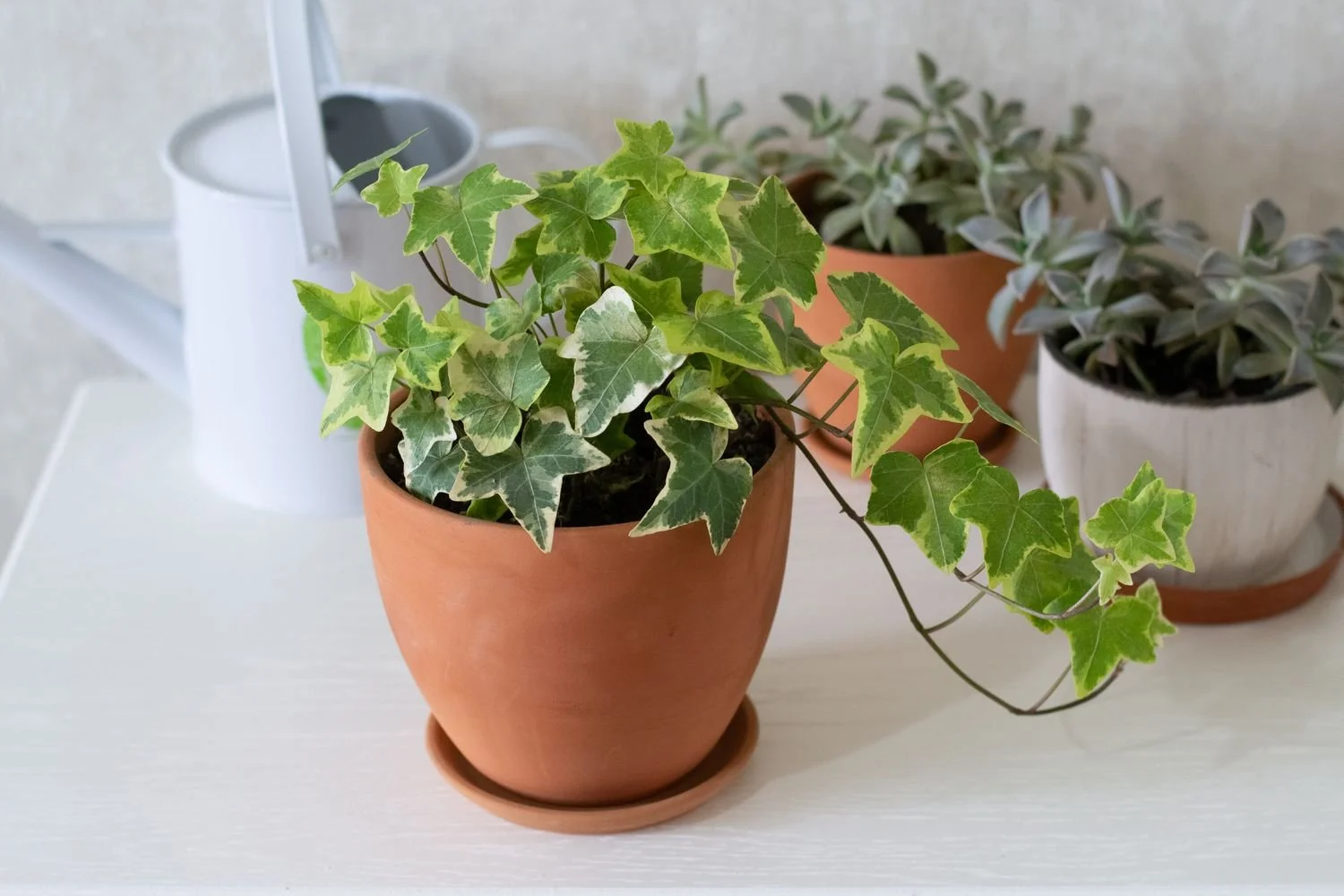
English Ivy
Hedera helix
English ivy is a trailing or climbing plant with dense vines and distinctive lobed leaves. It can be grown in a hanging basket, allowed to trail from a shelf, or trained around a small trellis.
Quick Care
Light: Medium to bright indirect light
Water: Water when the top inch feels dry
Humidity: Moderate to high
Temperature: 50–70°F preferred
Soil: Well-draining potting mix
Difficulty: Moderate
Pet safety: Toxic to cats and dogs
Light
Green English ivy tolerates medium indirect light but grows best in a bright location. Variegated varieties need brighter indirect light to maintain their cream or white markings.
Protect the plant from intense afternoon sun. If a variegated plant begins producing mostly green leaves, it probably needs more light.
Water
English ivy prefers lightly and consistently moist soil, but it should not remain saturated.
Check the soil before watering.
Water when the top inch feels dry.
Water thoroughly until excess drains.
Empty any water remaining in the saucer or decorative container.
Allowing the entire root ball to become bone-dry can cause crispy leaves and pest problems. Constantly wet soil can cause yellow leaves and root rot.
Temperature and Humidity
English ivy prefers cooler indoor temperatures of approximately 50–70°F. It often struggles in hot, dry rooms and should be kept away from heating vents.
Moderate to high humidity is beneficial. A humidifier or naturally humid room is more effective than occasional misting. Maintain airflow around the foliage to reduce fungal problems.
Soil and Repotting
Use a standard indoor potting mix amended with perlite for improved drainage. The container must have drainage holes.
Repot when the roots become crowded or the soil begins drying unusually quickly. Increase the container by only 1–2 inches.
Fertilizing
Apply a balanced liquid houseplant fertilizer at half strength once a month during spring and summer.
Reduce or stop fertilizing during winter when growth slows. Do not fertilize a severely dry or stressed plant.
Pruning and Training
Pinch or trim vine tips regularly to encourage fuller, branching growth. Long vines can be trained around a trellis or allowed to trail.
Remove any all-green vines from a variegated plant if you want to preserve its variegated appearance. Green growth is more vigorous and may eventually dominate the plant.
English ivy attaches itself to surfaces with aerial roots. Do not allow it to climb directly on painted walls, woodwork, or masonry you do not want damaged.
Pest Prevention
English ivy is particularly susceptible to spider mites indoors.
Inspect the undersides of leaves regularly for:
Fine webbing
Tiny moving specks
Pale stippling or faded foliage
Dry, curling leaves
Isolate newly purchased ivy from other houseplants for a short period and rinse the foliage periodically. Hot, dry conditions make spider mite infestations more likely.
Common Problems
Crispy brown leaves: Usually caused by dry soil, low humidity, excessive heat, or spider mites.
Yellow leaves: Often indicates excessive watering or poor drainage.
Long spaces between leaves: The plant needs brighter light.
Loss of variegation: Move the plant to brighter indirect light and remove solid-green vines.
Black or soft stems: This can indicate root or stem rot from wet conditions.
White powdery growth or leaf spots: Improve airflow, keep foliage dry, and remove heavily affected leaves.
Pet Safety
English ivy are not considered pet-safe. Its foliage contains triterpenoid saponins and can cause vomiting, abdominal pain, excessive salivation, and diarrhea if eaten.
Keep the plant out of reach of pets and children. Contact a veterinarian if ingestion is suspected. ASPCA English Ivy safety information
Mary Mae’s Best Advice
English ivy dislikes hot, dry indoor air. Keep it in a bright, cooler location, check it regularly for spider mites, and do not let it sit directly above a heating vent.
