
Fiddle Leaf Fig Care Guide
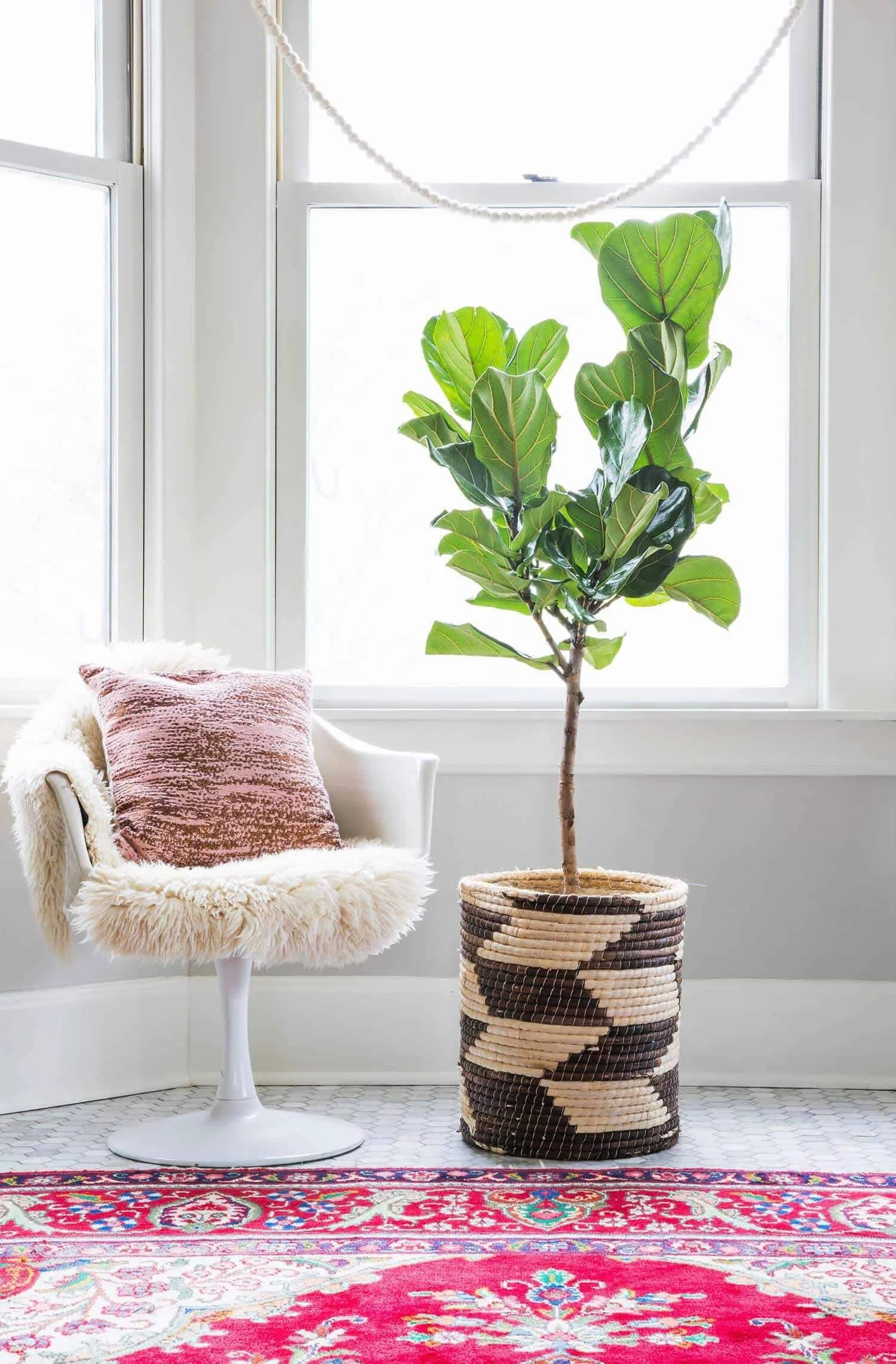
Fiddle Leaf Fig
Ficus lyrata
The Fiddle Leaf Fig is a striking foliage plant known for its large, violin-shaped leaves. The bush form contains multiple stems for a fuller appearance but requires the same care as the tree form.
Quick Care
Light: Very bright, indirect light
Water: Water when the top 2 inches feel dry
Humidity: Moderate
Temperature: 65–80°F
Soil: Well-draining potting mix
Difficulty: Moderate to challenging
Pet safety: Toxic to cats and dogs
Light
Place your Fiddle Leaf Fig directly beside a bright window. It needs several hours of strong, indirect light each day. Gentle morning sun is beneficial, but introduce direct sunlight gradually to prevent scorching.
This is not a low-light plant. Insufficient light commonly causes slow growth, leaf drop, and soil that remains wet too long.
Rotate the pot about one-quarter turn every week or two to encourage balanced growth.
Water
Water only after checking the soil rather than following a fixed schedule.
Wait until the top 2 inches of soil feel dry.
Water thoroughly until excess drains from the bottom.
Empty the saucer or decorative container.
Allow the soil to begin drying again before watering.
The entire root ball should receive water. Giving the plant frequent small drinks can leave some roots dry while keeping other areas constantly wet.
Water less frequently during winter when growth slows.
Temperature and Humidity
Maintain temperatures between 65 and 80°F. Keep the plant away from exterior doors, cold windows, heating vents, and air-conditioning drafts.
Average to moderately elevated household humidity is generally sufficient. Sudden environmental changes can cause leaf drop.
Placement
Choose an appropriate location and leave the plant there whenever possible. Fiddle Leaf Figs frequently react to abrupt changes in light, temperature, watering, or placement by dropping leaves.
Some temporary stress after bringing the plant home is possible. Avoid responding by watering repeatedly unless the soil is actually dry.
Soil and Repotting
Use a loose, well-draining indoor potting mix amended with perlite or fine orchid bark. The container must have drainage holes.
Repot every one to two years or when the plant becomes root-bound. Choose a pot only 1–2 inches wider than the current container. Oversized pots retain excess moisture and increase the risk of root rot.
Fertilizing
During spring and summer, apply a balanced liquid fertilizer at half strength approximately once a month.
Reduce or stop fertilizing during fall and winter when growth slows. Do not fertilize a plant experiencing root problems or severe leaf drop.
Cleaning and Pruning
Dust can accumulate quickly on the large leaves. Wipe both sides gently with a damp cloth. Avoid commercial leaf-shine products.
Prune damaged leaves or unwanted branches with clean tools. The white sap can irritate skin, so wear gloves and avoid contact with the eyes.
Pinching or pruning growing tips can encourage the bush form to produce additional branches.
Understanding Brown Spots
The location and texture of a brown spot can help identify its cause:
Dark, spreading spots with yellowing: Often associated with excessive moisture or root damage
Dry, crispy edges: Usually inconsistent watering, dry air, or prolonged dryness
Pale or bleached patches: Excessive direct sunlight
Small reddish-brown dots on new leaves: May occur from inconsistent moisture while a leaf is developing
A damaged leaf will not turn green again. Correct the underlying problem and watch the condition of new growth.
Common Problems
Leaf drop: Caused by sudden environmental changes, improper watering, cold drafts, or insufficient light.
Lower leaves yellowing: Often related to excessive moisture or poor drainage.
Drooping leaves: Check soil moisture before watering; both dryness and root damage can cause drooping.
Small new leaves or no growth: The plant likely needs more light.
Spider mites, scale, or mealybugs: Inspect the leaves and stems regularly for webbing, bumps, white residue, or sticky surfaces.
Pet Safety
Fiddle Leaf Fig are not considered pet-safe. Eating the plant may cause gastrointestinal and mouth irritation, including vomiting or diarrhea. Its milky sap can also irritate skin.
Keep the plant out of reach of pets and children, and contact a veterinarian if ingestion is suspected. ASPCA Fiddle Leaf Fig safety information
Mary Mae’s Best Advice
Give this plant a bright, permanent location and check the soil before watering. Moving it repeatedly or watering every time a leaf droops usually makes the problem worse.
