
Dracaena Care Guide
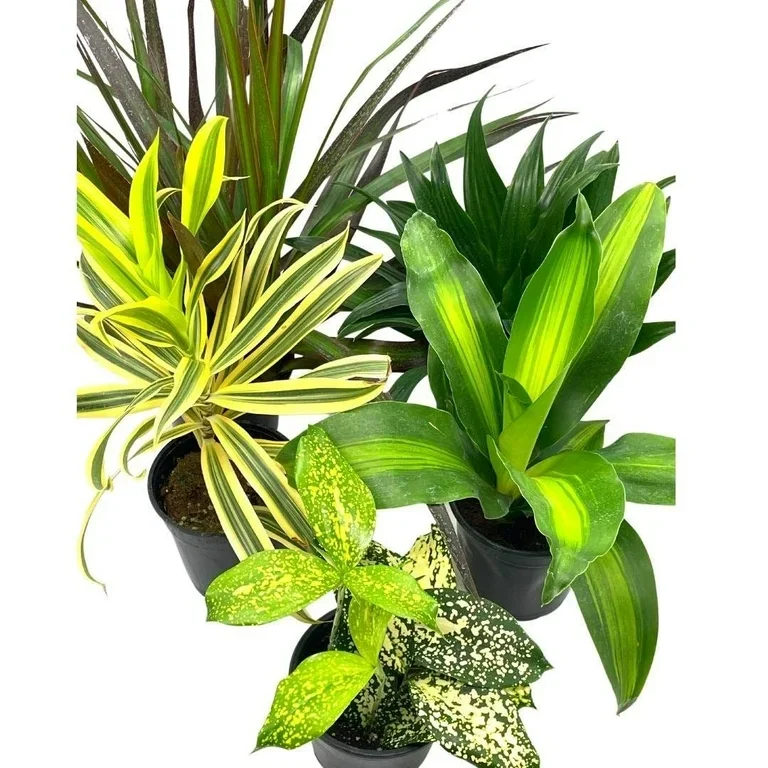
Dracaena fragrans cultivars
Covers Lemon Lime and Limelight Dracaena
Dracaenas are upright tropical foliage plants with long, strap-shaped leaves. Lemon Lime has green leaves striped with lime and yellow, while Limelight produces bright chartreuse foliage. Both varieties have essentially identical care needs.
Quick Care
Light: Medium to bright indirect light
Water: Water when the top 2–3 inches feel dry
Humidity: Average to moderate
Temperature: 65–80°F
Soil: Well-draining potting mix
Difficulty: Easy
Pet safety: Toxic to cats and dogs
Light
Place your Dracaena in medium to bright indirect light. Brighter filtered light produces stronger growth and better coloring.
These plants tolerate lower light, but growth becomes slower and the foliage may lose vibrancy. Avoid intense afternoon sun, which can bleach or scorch the leaves.
Limelight generally needs bright indirect light to retain its vivid chartreuse color.
Water
Dracaenas are more tolerant of dryness than constantly wet soil.
Check the soil before watering.
Wait until the top 2–3 inches feel dry.
Water thoroughly until excess drains.
Empty the saucer or decorative container.
Water less frequently during winter or in lower-light conditions. Soft stems, yellow leaves, and persistently wet soil indicate excessive watering.
Water Quality
Dracaenas can be sensitive to fluoride, salts, and other minerals found in some tap water. These may contribute to brown or yellow leaf tips.
If tip burn continues despite correct watering and humidity, try using filtered, distilled, or rainwater. Do not use softened water because it may contain additional salts.
Occasionally flush the potting mix thoroughly with water to remove accumulated fertilizer salts.
Temperature and Humidity
Maintain temperatures between 65 and 80°F. Keep the plant above 55°F and away from exterior doors, cold windows, and heating or cooling vents.
Average household humidity is normally sufficient. Very dry air can contribute to brown tips.
Soil and Repotting
Use a standard indoor potting mix amended with perlite or fine bark for drainage. The container must have drainage holes.
Dracaenas grow relatively slowly and generally need repotting only every two to three years. Move up by no more than 1–2 inches in pot diameter.
Fertilizing
During spring and summer, apply a balanced liquid fertilizer at one-quarter to half strength approximately once a month.
Reduce or stop fertilizing during fall and winter. Dracaenas are not heavy feeders, and excessive fertilizer commonly causes brown leaf tips.
Pruning and Shaping
Remove fully yellow or brown leaves by cutting them near the stem. Brown tips can be trimmed cosmetically by following the leaf’s natural shape.
If a cane becomes too tall, cut it at the desired height using clean pruners. New shoots can emerge below the cut, creating a fuller plant.
The removed top may also be rooted as a cutting.
Common Problems
Brown leaf tips: Often caused by mineral-heavy water, fertilizer buildup, low humidity, or inconsistent watering.
Yellow lower leaves: An occasional older yellow leaf is normal. Multiple yellow leaves may indicate excessive watering.
Pale or dull coloring: The plant likely needs brighter indirect light.
Bleached patches: Usually caused by excessive direct sunlight.
Soft cane or foul-smelling soil: A sign of advanced root or stem rot.
Spider mites or mealybugs: Inspect the leaves and stem joints for pale stippling, webbing, sticky residue, or white cottony material.
Pet Safety
Dracaenas are toxic to cats and dogs. They contain saponins and may cause vomiting, drooling, loss of appetite, depression, weakness, or poor coordination. Cats may also develop dilated pupils.
Keep the plant away from pets and children. Contact a veterinarian if ingestion is suspected. ASPCA Dracaena safety information
Mary Mae’s Best Advice
Let the upper few inches of soil dry before watering. If the plant repeatedly develops brown tips despite proper care, switch from tap water to filtered or distilled water before changing anything else.
