
Croton Care Guide
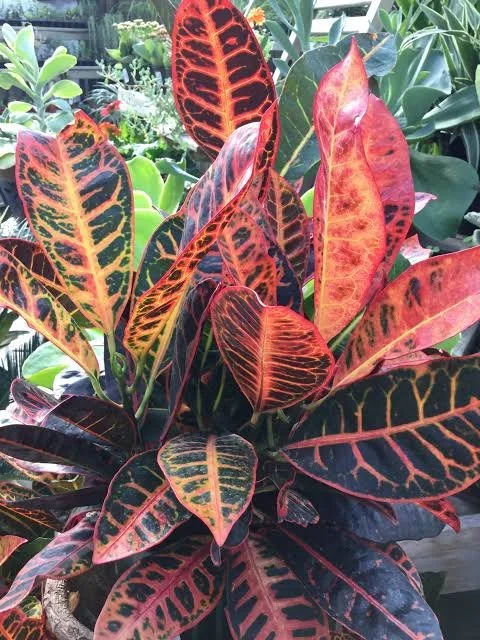
Croton
Codiaeum variegatum
Crotons are tropical houseplants known for their glossy leaves patterned with green, yellow, orange and red. Their coloring varies by variety, but all crotons have similar care requirements. They need plenty of light, steady warmth and consistent care to retain their leaves and vivid coloring.
Quick Care
Light: Very bright light with some gentle direct sun
Water: Water when the top 1–2 inches of soil feel dry
Humidity: Average to high
Temperature: 65–80°F
Difficulty: Moderate
Pet friendly: No
Growth habit: Upright and bushy, potentially 2–6 feet indoors
Light
Place your croton in one of the brightest locations in your home. Several hours of gentle morning or late-afternoon sun can help maintain its strong coloring.
Crotons may lose color and drop their lower leaves when kept in insufficient light. Introduce the plant gradually to stronger direct sunlight to avoid scorching its foliage.
Water
Water when the top 1–2 inches of soil feel dry. Thoroughly saturate the soil until water drains from the bottom of the pot, then discard any water collected inside the saucer or decorative container.
Avoid allowing the soil to remain waterlogged, but do not let it become completely dry for an extended period. Crotons may drop leaves after being severely overwatered or underwatered.
Water less frequently during winter as the plant’s growth slows.
Temperature and Humidity
Crotons prefer temperatures between approximately 65°F and 80°F. Keep them away from cold windows, exterior doors, air-conditioning vents and sudden temperature changes.
Avoid temperatures below 55°F. Moderate to high humidity is beneficial, especially during Erie’s dry indoor winters.
Soil and Repotting
Use a fertile, well-draining indoor potting mix. The container should have a functional drainage hole.
Repot during spring when the plant becomes root-bound. Move it into a container only 1–2 inches wider than its current pot. An oversized container can hold excessive moisture around the roots.
Fertilizing
Apply a balanced houseplant fertilizer approximately once a month during spring and summer, following the product’s dilution instructions.
Reduce or stop fertilizing during fall and winter. Do not fertilize a recently repotted, severely dry or otherwise stressed plant.
Pruning and Handling
Prune long or uneven stems during spring to encourage a fuller shape. Always use clean cutting tools.
Crotons release a milky sap when their leaves or stems are damaged. The sap can irritate skin and eyes and may permanently stain fabric. Wear gloves, wash your hands afterward and keep the sap away from your face.
Common Problems
Sudden leaf drop: Crotons frequently drop leaves after changes in location, temperature, light or watering. Give the plant stable conditions while it adjusts.
Fading or mostly green leaves: The plant likely needs brighter light.
Brown, crispy edges: Often caused by extremely dry soil, low humidity, cold drafts or fertilizer buildup.
Yellowing leaves: Check for overwatering, poor drainage or water trapped inside the decorative container.
Fine webbing or speckled leaves: Inspect closely for spider mites, which are a common croton pest.
Pet Safety
Crotons are not considered pet-safe. Ingestion can cause irritation of the mouth and digestive system, including drooling, vomiting and diarrhea. Contact with the sap can also irritate the skin.
Keep this plant out of reach of cats, dogs and children. Contact a veterinarian or pet-poison service if a pet chews or consumes it. Pet Poison Helpline plant profile
Mary Mae’s Best Advice
Crotons dislike sudden changes. Choose a warm, bright location and leave the plant there whenever possible. Some leaf loss immediately after bringing it home is normal, but continued leaf loss usually indicates insufficient light, improper watering or cold drafts.
