
Bromeliad Care Guide
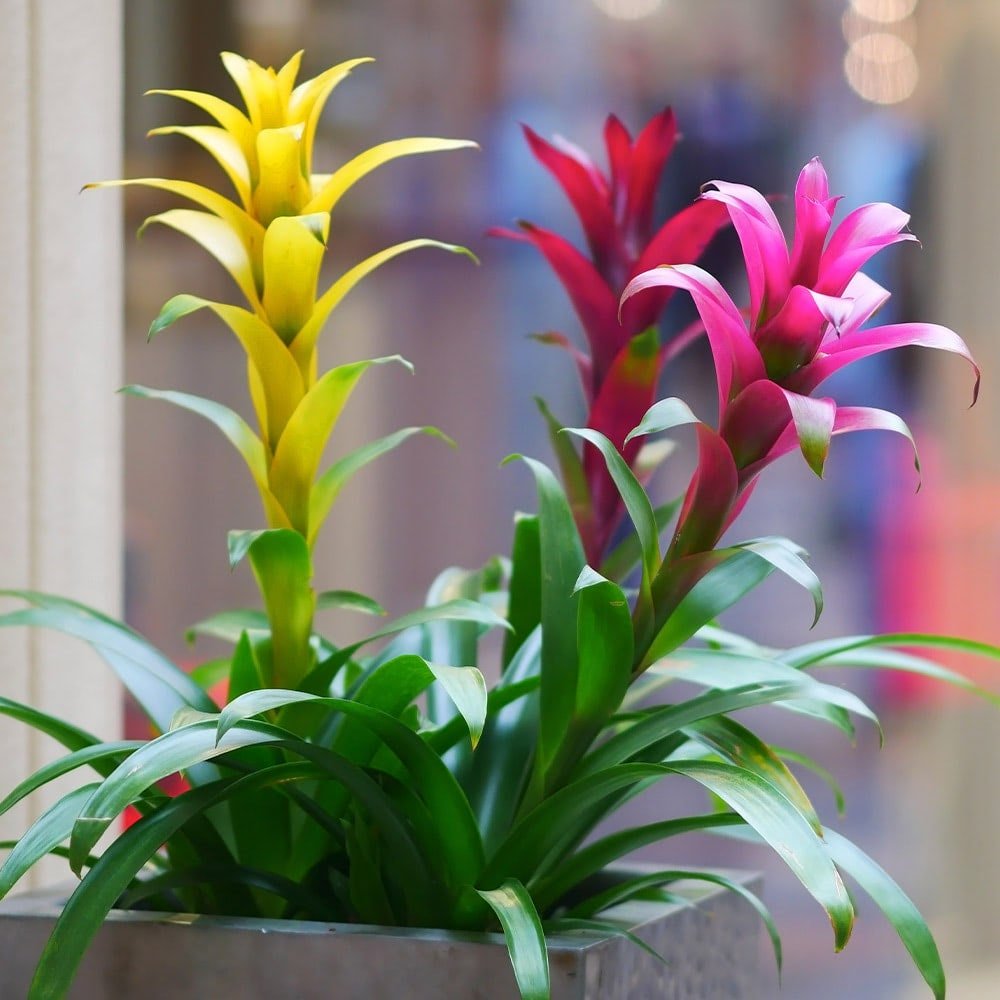
Bromeliad
Bromeliaceae family
Bromeliads are tropical plants recognized by their rosette-shaped foliage and long-lasting, brightly colored flower bracts. Most bromeliads sold as flowering houseplants are varieties of Guzmania, Vriesea, Aechmea or Neoregelia and have similar basic care requirements.
Quick Care
Light: Bright, indirect light
Water: Maintain some water in the center cup; keep soil lightly moist but never soggy
Humidity: Moderate to high
Temperature: 60–85°F
Difficulty: Easy to moderate
Pet friendly: Generally considered non-toxic
Growth habit: Upright rosette that produces offsets called pups
Light
Place your bromeliad in bright, indirect light. An east-facing window or a position near a filtered south- or west-facing window is usually ideal.
Insufficient light can slow growth and cause foliage or flower bracts to fade. Intense direct afternoon sun may bleach or scorch the leaves.
Some varieties tolerate more sunlight than others, so watch the plant for signs of stress when moving it into a brighter location.
Water
Most flowering bromeliads form a natural cup or tank in the center of their leaves. Keep a small amount of clean water in this center cup rather than filling it completely.
Empty and rinse the cup approximately once a month before refilling it. This prevents stagnant water, mineral buildup and unpleasant odors. Rainwater, distilled water or filtered water is preferable when available.
Water the potting mix when its upper portion feels nearly dry. Do not allow the roots to remain in soggy soil or standing water.
If your bromeliad does not form a central cup, water the potting mix normally instead.
Temperature and Humidity
Bromeliads prefer temperatures between approximately 60°F and 85°F. Protect the plant from cold drafts, heating vents and sudden temperature changes.
Average household humidity is normally sufficient, although moderate humidity helps prevent brown leaf tips. Avoid placing the plant directly beside a humidifier where water can constantly collect on the foliage.
Soil and Repotting
Use a loose, fast-draining mixture. Orchid bark mixed with indoor potting soil and perlite works well for most bromeliads.
Bromeliads have relatively small root systems and usually do not need frequent repotting. Avoid placing them in oversized containers, which can retain too much moisture.
Fertilizing
Bromeliads require very little fertilizer. During spring and summer, apply a balanced liquid houseplant fertilizer at approximately one-quarter to one-half of the label strength every four to eight weeks.
Avoid applying concentrated fertilizer directly into the center cup. Excess fertilizer can damage the foliage and create mineral buildup.
After Flowering
A bromeliad’s central flowering rosette blooms only once. After flowering, the original plant will gradually decline, but this is a normal part of its life cycle—not a care failure.
Before declining, the plant should produce smaller offsets called pups around its base. Leave the pups attached until they reach approximately one-third to one-half the size of the parent plant. They can then be separated and planted individually or left together to create a fuller display.
Common Problems
Brown leaf tips: Often caused by dry air, mineral-heavy water, fertilizer buildup or inconsistent watering.
Yellowing or soft lower leaves: Usually associated with soggy soil or poor drainage.
Faded foliage or flower bracts: The plant may need brighter indirect light, although natural fading also occurs as flowering ends.
Rotting center: Remove stagnant water, improve air circulation and avoid keeping the center cup completely full in cool or low-light conditions.
White or brown bumps on leaves: Inspect for mealybugs or scale insects.
Pet Safety
Commonly sold bromeliads are generally considered non-toxic to cats and dogs. The ASPCA specifically classifies Neoregelia bromeliads as non-toxic. However, the invoice identifies these plants only as “assorted,” so the precise genus should be checked on the grower’s tag whenever possible.
Eating any plant material may still cause mild stomach upset. Discourage pets from chewing the foliage. ASPCA bromeliad profile
Mary Mae’s Best Advice
Do not treat a bromeliad like an ordinary leafy houseplant. Keep a little clean water in its center cup, avoid soaking the potting mix and remember that the original plant naturally declines after flowering. The pups it produces are the next generation of the plant.
