
Assorted Succulent Care Guide
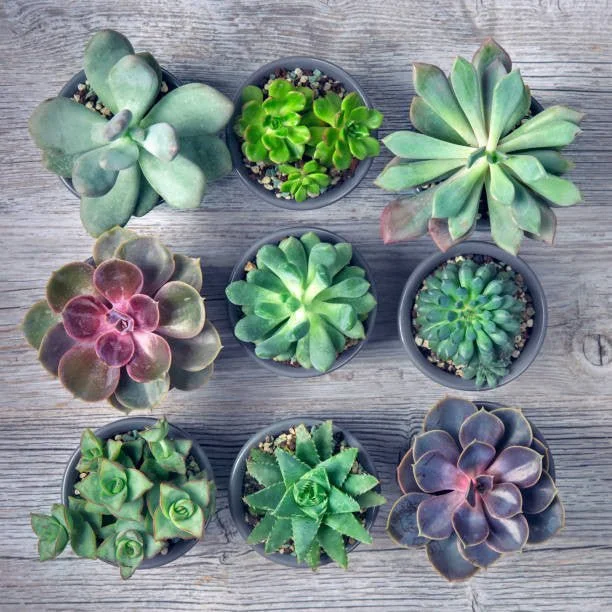
Assorted Succulents
Various genera and species
Succulents are a diverse group of plants that store water in their thickened leaves, stems or roots. Their shapes, colors and growth habits vary, but most indoor succulents need abundant light, fast-draining soil and less frequent watering than typical houseplants.
Quick Care
Light: Very bright light; many varieties benefit from direct sun
Water: Soak thoroughly, then allow the soil to dry completely
Humidity: Low to average
Temperature: Approximately 60–80°F
Difficulty: Easy when provided enough light
Pet friendly: Varies by species
Growth habit: Varies by variety
Light
Place your succulent in one of the brightest locations available. A south- or west-facing window is often best. Many varieties benefit from several hours of direct sunlight each day.
Introduce the plant to stronger direct sun gradually. A plant grown under greenhouse shade can scorch if it is suddenly placed in intense afternoon sunlight.
Rotate the container occasionally to encourage even growth.
Water
Wait until the potting mix has dried completely before watering. Then thoroughly saturate the soil until water runs through the drainage hole. Empty the saucer or decorative container afterward.
Do not provide small amounts of water on a frequent schedule. Deep, infrequent watering encourages healthier roots.
Succulents generally need much less water during Erie’s low-light winter months. Always check the soil instead of watering according to the calendar.
Temperature and Humidity
Most common indoor succulents are comfortable between approximately 60°F and 80°F. Protect them from frost, cold windows and temperatures below 50°F unless the specific variety is known to tolerate colder conditions.
Low to average household humidity is preferred. Succulents generally do not need misting.
Soil and Repotting
Use a fast-draining cactus and succulent potting mix. Additional perlite or pumice can be added if the mixture remains wet for too long.
A drainage hole is strongly recommended. Terracotta containers can be especially helpful because they allow moisture to evaporate more quickly.
Repot when the plant becomes crowded or its roots fill the container. Choose a new pot only slightly larger than the existing one.
Fertilizing
Succulents have relatively low fertilizer requirements. Apply a cactus-and-succulent fertilizer or diluted houseplant fertilizer approximately once a month during active spring and summer growth.
Stop or significantly reduce feeding during fall and winter. Excess fertilizer can produce weak, stretched growth.
Common Problems
Soft, translucent or yellowing leaves: Usually caused by overwatering or soil that stays wet too long.
Shriveled or wrinkled leaves: The plant may be ready for water, provided the soil is completely dry.
Tall, stretched or leaning growth: The plant is not receiving enough light. Move it gradually to a brighter location.
Brown or bleached patches: Often caused by sunburn after a sudden increase in direct sunlight.
Leaves falling easily: Can result from overwatering, insufficient light, temperature stress or normal aging, depending on the variety.
White cottony clusters: Inspect closely for mealybugs.
Pet Safety
Pet safety cannot be determined from the word “succulent” alone. Some succulents—such as many Echeveria, Haworthia and Sempervivum varieties—are generally considered non-toxic. Others, including jade plants, kalanchoes, aloes and euphorbias, can be harmful.
Check the individual plant’s identification tag before placing it within reach of a cat or dog. If the exact variety is unknown, treat the plant as not verified pet-safe.
Mary Mae’s Best Advice
Most succulent problems come from insufficient light or excessive watering. Give the plant the brightest appropriate location you have, use a container with drainage and wait until the soil is dry all the way through before watering again.
