
Angel Vine Care Guide
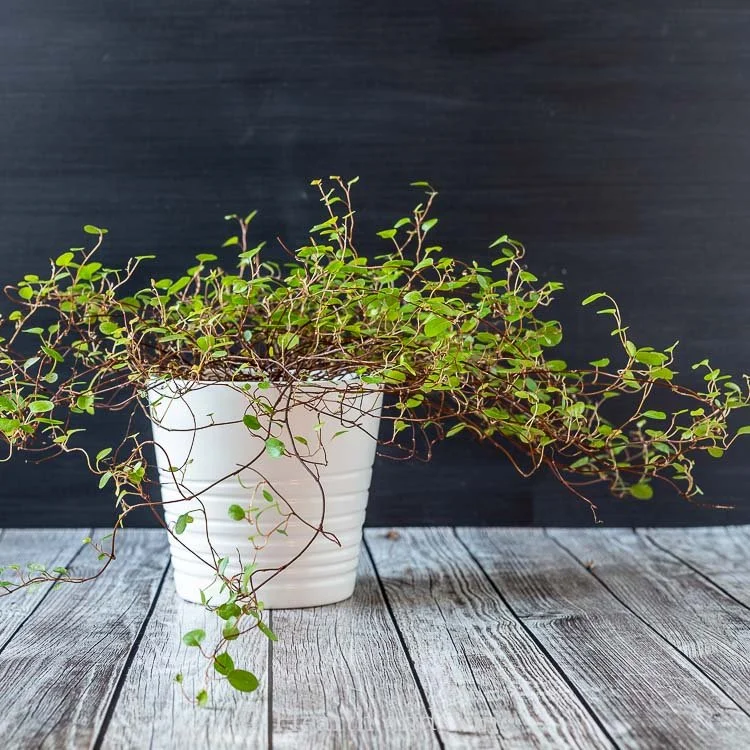
Muehlenbeckia complexa
Angel Vine is a delicate trailing plant with wiry stems and tiny rounded leaves. It can be grown in a hanging basket, allowed to trail from a shelf, or trained around a small topiary form.
Light
Provide bright, indirect light. Angel Vine can tolerate some gentle morning or late-afternoon sun, but intense midday sunlight may scorch or dry the foliage.
Insufficient light can cause:
Sparse or stretched growth
Leaf loss
Slower soil drying
Increased risk of overwatering
Water
Water when the top inch of soil feels dry. Thoroughly moisten the root ball, allow excess water to drain, and empty the saucer or decorative container.
Angel Vine does not tolerate prolonged drought well. Its fine foliage may become crispy and drop quickly if the entire root ball dries out. However, constantly saturated soil can cause yellowing and root rot.
Check small pots frequently because they can dry considerably faster than larger containers.
Humidity
Average household humidity is usually acceptable, although moderate humidity can help prevent crispy foliage.
Keep the plant away from heating vents and extremely dry air. Good airflow is important, particularly when humidity is elevated.
Temperature
Maintain temperatures between approximately 60 and 75°F. Angel Vine generally prefers slightly cooler conditions than many tropical houseplants.
Protect it from:
Temperatures below approximately 50°F
Hot or cold drafts
Heating vents
Sudden temperature changes
Soil and Repotting
Use a loose, well-draining indoor potting mixture. The container must have drainage holes.
Repot when roots become crowded or the soil dries unusually quickly. Increase the pot by only one size to avoid retaining excessive moisture.
Fertilizing
Feed monthly during spring and summer with a balanced houseplant fertilizer diluted to half strength.
Reduce or stop fertilizing during fall and winter when growth slows.
Pruning and Shaping
Trim long or tangled stems to maintain the desired shape and encourage fuller growth. Angel Vine responds well to regular light pruning during active growth.
If it is trained around a wire form, gently weave new growth into the structure rather than forcing or sharply bending the stems.
Common Problems
Dry, crispy leaves: The soil became too dry, the air is extremely dry, or the plant is receiving excessive direct sunlight.
Yellow leaves: Often caused by excessive watering or poor drainage.
Sudden leaf drop: May result from severe dryness, temperature stress, relocation, or root problems.
Sparse growth: Move the plant into brighter indirect light and prune stretched stems.
Spider mites, aphids, or mealybugs: Inspect the fine stems and leaf undersides regularly because pests can be difficult to see among the dense growth.
Pet Safety
Reliable toxicity information for Angel Vine is limited. Keep the plant out of pets’ reach and discourage pets from chewing any houseplant.
Contact a veterinarian or poison-control service if a pet eats the plant and develops symptoms.
Mary Mae’s Quick Advice
Give Angel Vine bright filtered light and check its soil regularly. Water once the top inch dries, but do not let the entire root ball become bone dry. Its small pots and fine foliage can dry faster than expected.
