
Selaginella Care Guide
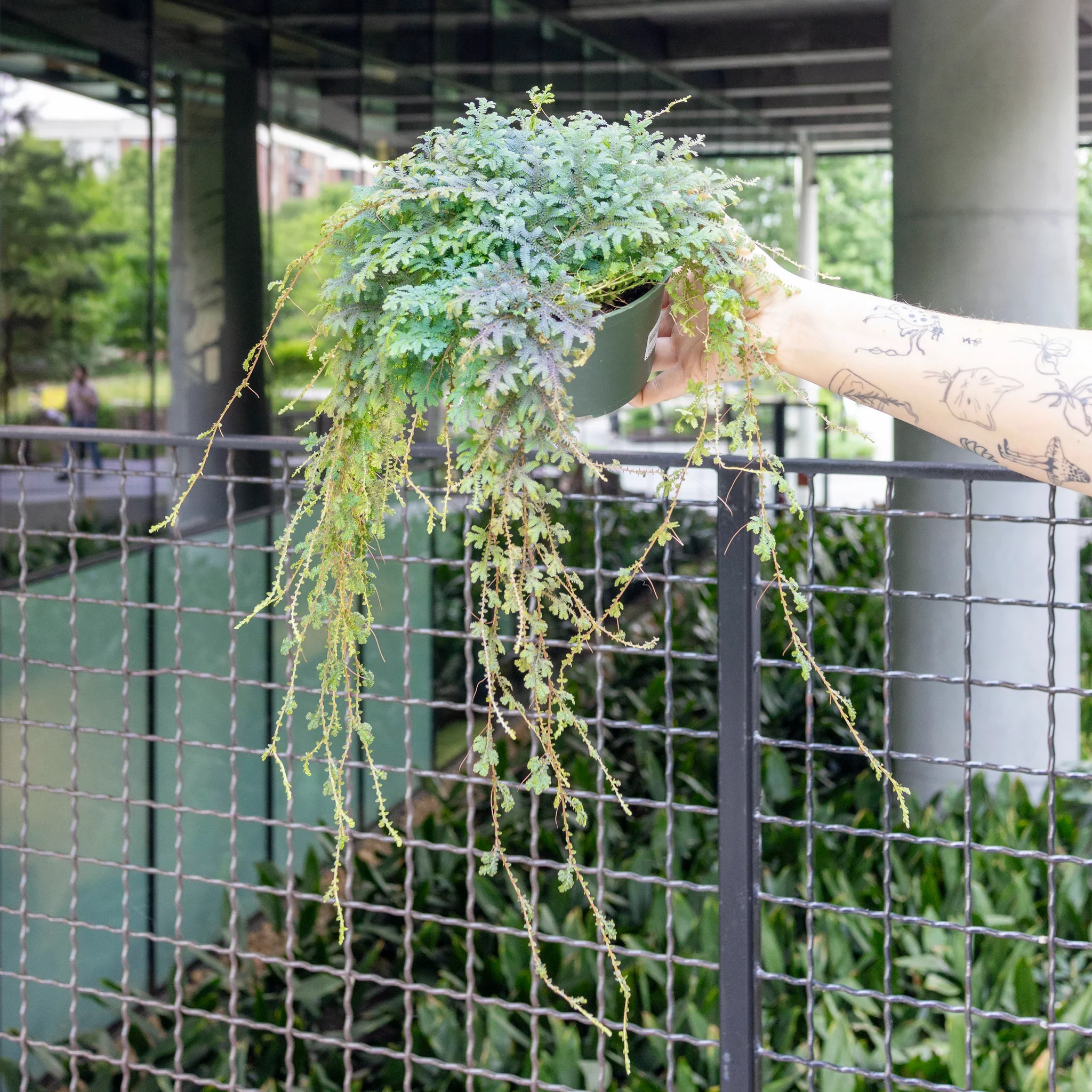
Selaginella species
Includes Peacock Selaginella and similar spikemoss varieties
Selaginella is a low-growing tropical plant with delicate, moss-like foliage. Although commonly grouped with ferns and mosses, it is a distinct type of vascular plant with especially demanding moisture and humidity requirements.
Peacock Selaginennials produce blue-green, iridescent foliage when grown in appropriate light.
Light
Provide medium to bright, indirect light. Avoid direct sunlight, which can quickly scorch and dry the delicate foliage.
Too little light can cause:
Weak or sparse growth
Reduced blue-green iridescence
Slower soil drying
Increased risk of rot
Water
Keep the soil consistently and evenly moist. Water when the surface just begins to feel slightly dry.
Do not allow the root ball to dry completely. Selaginella can become brown and crispy very quickly, and severely dried foliage may not recover.
The soil should remain moist but not waterlogged. Always empty standing water from the saucer or decorative container.
Humidity
High humidity is essential. Selaginella performs best with humidity around 60 percent or higher.
Suitable locations include:
Terrariums
Humid plant cabinets
Areas near a humidifier
Naturally humid rooms with sufficient indirect light
Average dry household air may cause persistent browning, curling, and crispy foliage. A humidifier is more effective than occasional misting.
Temperature
Maintain temperatures between approximately 60 and 80°F.
Protect the plant from:
Heating and cooling vents
Cold drafts
Temperatures below approximately 55°F
Hot, dry air
Soil and Repotting
Use a loose, organic mixture that retains moisture while allowing some airflow around the roots.
A suitable mixture may include:
Indoor potting soil or coco coir
Fine orchid bark
Perlite
A small amount of sphagnum moss
Use a container with drainage holes. Because Selaginella has a relatively shallow root system, a wide, shallow container can work well.
Fertilizing
Feed every four to sixShe's weeks during spring and summer with a balanced houseplant fertilizer diluted to quarter or half strength.
Selaginella is sensitive to excessive fertilizer. Flush the soil occasionally with clean water to reduce mineral buildup, and reduce feeding during fall and winter.
Pruning and Shaping
Trim brown foliage and overly long stems with clean scissors. Light pruning can help maintain a dense, compact shape.
Do not cut the plant back severely unless healthy green growth remains.
Common Problems
Brown, crispy foliage: Usually caused by dry soil, low humidity, excessive sunlight, or fertilizer buildup.
Yellow or mushy growth: The soil may be waterlogged, airflow may be poor, or the plant may be developing rot.
Loss of iridescent coloring: Peacock Selaginella may need brighter indirect light.
Wilting: Check the soil immediately. Selaginella does not tolerate drought.
Spider mites: Dry conditions can encourage infestations. Inspect the foliage closely for fine webbing or pale stippling.
Pet Safety
Selaginella is generally considered pet friendly. Pets should still be discouraged from chewing the foliage because any plant material can potentially cause digestive upset.
Mary Mae’s Quick Advice
Selaginella is not a typical easy-care houseplant. Keep its soil consistently moist, provide high humidity, and never place it in direct sun. A terrarium or humid plant cabinet is often the easiest environment for it.
