
Alocasia Amazonica Care Guide
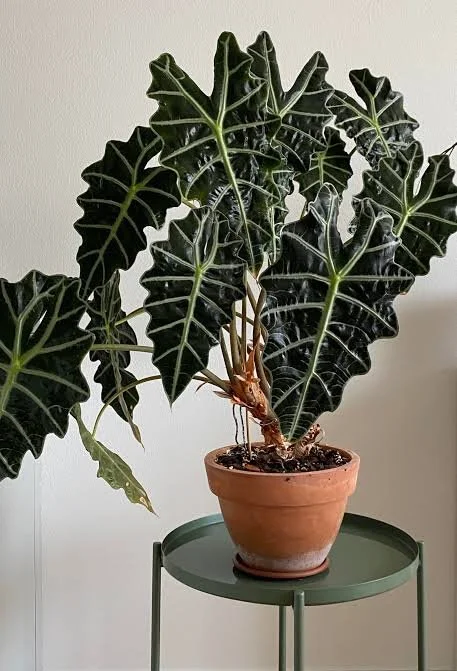
Alocasia Amazonica
Alocasia × amazonica
Alocasia Amazonica is a dramatic tropical plant with dark arrow shaped leaves, pale veins, and scalloped edges. It requires warm temperatures, humidity, and careful watering.
Light
Provide bright indirect light. Gentle morning sun is usually acceptable, but intense afternoon sunlight can scorch the leaves.
Too little light may cause weak growth, smaller leaves, and prolonged wet soil.
Water
Water when the top inch of soil feels dry. Thoroughly soak the soil and allow all excess water to drain.
Keep the soil lightly moist during active growth, but never soggy. Reduce watering when growth slows during winter.
Humidity
High humidity is preferred. A humidifier is the most reliable option.
Avoid placing the plant near heating vents, air conditioners, or cold drafts.
Temperature
Keep between approximately 65 and 85°F. Temperatures below approximately 60°F may trigger stress or dormancy.
Soil and Repotting
Use a chunky, fast draining aroid mix containing indoor potting soil or coco coir, orchid bark, and perlite.
Use a container with drainage and avoid planting in an oversized pot, which can hold excessive moisture around the roots.
Fertilizer
Feed every two to four weeks during spring and summer with a balanced fertilizer diluted to half strength.
Reduce or stop fertilizing when growth slows.
Dormancy
Alocasias may slow their growth or lose leaves during winter. If the plant becomes dormant, reduce watering but do not allow the underground corm to remain completely dry for an extended period.
Common Problems
Yellow leaves commonly indicate overwatering, poor drainage, low light, or natural aging.
Brown edges may indicate low humidity, inconsistent watering, or fertilizer buildup.
Drooping or curling leaves may indicate dry soil, low humidity, cold temperatures, or root problems.
Watch closely for spider mites, thrips, and mealybugs.
Pet Safety
Keep Alocasia Amazonica out of pets’ reach. Alocasias contain insoluble calcium oxalate crystals that can cause mouth irritation, drooling, difficulty swallowing, and vomiting if chewed.
Mary Mae’s Quick Advice
Give your Alocasia Amazonica bright filtered light, let the top inch dry, and keep it warm and humid without leaving the roots soggy.
