
Alocasia Care Guide
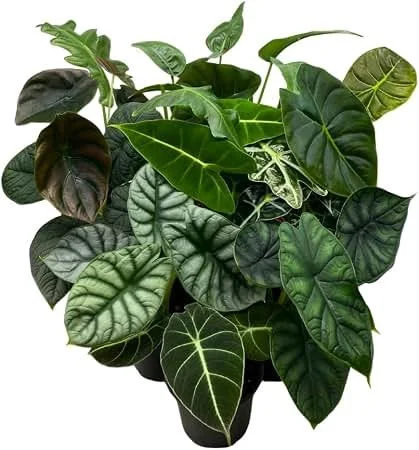
Alocasia species, cultivars, and hybrids
This general guide covers Amazonica, Dragon Scale, Dragon Scale Mint, Frydek, Variegated Frydek, Jacklyn, Loco, Longiloba Silver, Parasol, Red Secret, Stingray, Zebrina, and similar Alocasias.
Alocasias are tropical plants known for their dramatic foliage. They grow best with bright filtered light, warmth, humidity, and careful watering. Although individual varieties differ slightly, their fundamental care requirements are similar.
Light
Provide bright, indirect light. Gentle morning sunlight is usually beneficial, but protect the leaves from intense afternoon sun.
Variegated Alocasias require especially bright indirect light to maintain their coloring. Because their pale leaf sections contain less chlorophyll, they may grow more slowly than green varieties.
Insufficient light can cause:
Weak or stretched growth
Smaller leaves
Loss of variegation
Soil remaining wet for too long
Increased risk of root rot
Water
Water when the top inch of soil feels dry. For larger containers, allow the upper one to two inches to dry.
Water thoroughly until excess drains from the bottom, then empty the saucer or decorative container. The soil should remain lightly moist during active growth but never saturated.
Reduce watering when temperatures or light levels decrease. Do not water on a fixed schedule because drying time changes with the season, light, pot size, and soil mixture.
Jewel Alocasias, including Dragon Scale and Red Secret, are especially sensitive to soggy soil.
Humidity
Alocasias prefer moderate to high humidity. A humidifier is the most reliable way to increase humidity.
Avoid repeatedly misting the leaves. Constantly wet foliage combined with poor airflow can encourage fungal and bacterial problems.
Brown edges do not always mean the plant needs more water. Low humidity, inconsistent watering, fertilizer buildup, and damaged roots can all cause browning.
Temperature
Keep Alocasias between approximately 65 and 85°F. Protect them from:
Temperatures below 60°F
Cold windows and exterior doors
Heating and cooling vents
Sudden temperature changes
Cold conditions can slow growth, damage leaves, and trigger dormancy.
Soil and Repotting
Use a chunky, fast-draining aroid mixture containing ingredients such as:
Indoor potting soil or coco coir
Orchid bark
Perlite or pumice
Always use a container with drainage holes. Choose a pot only slightly larger than the root system because oversized containers remain wet longer and increase the risk of root rot.
Repot when the roots have filled the container or the soil has broken down and no longer drains properly.
Fertilizing
During spring and summer, feed every two to four weeks with a balanced houseplant fertilizer diluted to half strength.
Reduce or stop fertilizing when growth slows. Do not fertilize a plant that is dormant, severely stressed, or suffering from root damage.
Dormancy
Alocasias may slow their growth or lose some or all of their leaves when light or temperatures decrease. This does not necessarily mean the plant is dead. The underground corm may remain alive and produce new growth when conditions improve.
During dormancy:
Keep the plant warm
Provide bright indirect light
Reduce watering
Keep the soil from remaining completely dry for an extended period
Resume normal feeding only after new growth appears
Variety-Specific Notes
Variegated Frydek and Dragon Scale Mint: Provide very bright indirect light. Pale portions of the leaves scorch more easily and cannot photosynthesize as efficiently as green tissue.
Dragon Scale and Red Secret: Use a particularly airy soil mixture and allow the surface to dry before watering. These compact jewel Alocasias are especially vulnerable to root and corm rot.
Stingray, Zebrina, Jacklyn, and Longiloba: These varieties may grow taller and lean toward the light. Rotate the container periodically for more balanced growth.
Amazonica and Parasol: Keep the soil lightly moist during active growth, but never constantly wet.
Common Problems
Yellow leaves: May indicate excessive watering, poor drainage, insufficient light, root problems, or normal aging of an older leaf.
Brown or crispy edges: Commonly caused by low humidity, inconsistent watering, fertilizer buildup, or root stress.
Drooping leaves: Check for dry soil, saturated soil, cold temperatures, transplant stress, or damaged roots.
Curling leaves: May indicate dryness, low humidity, excessive heat, or pest activity.
Loss of variegation: Move the plant into brighter indirect light. Completely green growth may need to be removed if it begins dominating a variegated plant.
Soft stems or a foul smell: Inspect immediately for root or corm rot.
Spider mites, thrips, scale, or mealybugs: Inspect the leaf undersides and stems regularly. Alocasias are particularly susceptible to spider mites.
Pet Safety
Keep Alocasias out of pets’ reach. Their tissues contain insoluble calcium oxalate crystals, which may cause mouth irritation, drooling, vomiting, or difficulty swallowing if chewed.
Contact a veterinarian or poison-control service if ingestion is suspected.
Mary Mae’s Quick Advice
Give your Alocasia bright filtered light, warmth, and a chunky soil mixture. Let the surface dry before watering, but do not allow the entire root ball to remain bone dry. If you are unsure whether it needs water, check the soil rather than guessing from a drooping leaf.
