
African Violet Care Guide
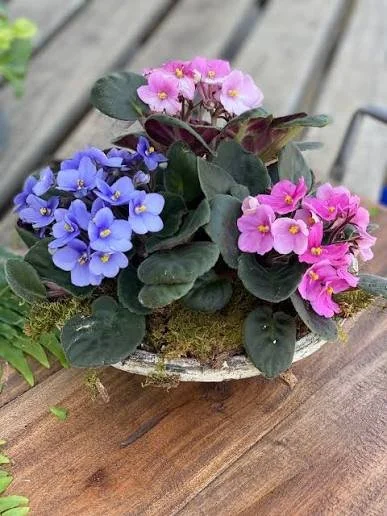
African Violet
Streptocarpus ionanthus
Formerly classified as Saintpaulia ionantha
African violets are compact houseplants known for their soft, fuzzy leaves and colorful flowers. With proper light and careful watering, they can bloom repeatedly throughout the year.
Quick Care
Light: Bright, indirect light
Water: Keep lightly moist; allow the surface to begin drying
Humidity: Average to moderately high
Temperature: Approximately 65–75°F
Difficulty: Moderate
Pet friendly: Yes—non-toxic to cats and dogs
Growth habit: Compact rosette
Light
Provide bright, indirect light. An east-facing window is usually ideal. African violets can also grow well near a filtered south- or west-facing window.
Too much direct sunlight can scorch the leaves, while insufficient light can prevent flowering and cause the leaves to stretch upward.
Rotate the plant approximately one-quarter turn each week to maintain an even, symmetrical shape.
Water
Water when the surface of the potting mix begins to feel slightly dry. African violets prefer consistent moisture but should never remain saturated.
Use room-temperature water. Cold water splashed onto the fuzzy leaves can cause spotting or tissue damage.
You can water carefully beneath the leaves or place the nursery pot in a shallow container of water for approximately 15–20 minutes. After bottom-watering, remove the plant and allow it to drain completely.
Do not leave the pot continuously standing in water unless it is growing in a properly designed African-violet self-watering container.
Temperature and Humidity
Maintain temperatures around 65–75°F. Protect the plant from cold windows, exterior doors, heating vents and rapid temperature changes.
Average household humidity is generally adequate. Avoid misting the fuzzy foliage because water remaining on the leaves or crown can encourage spotting and rot.
Soil and Repotting
Use a light, porous potting mix formulated specifically for African violets. Standard indoor potting soil may retain too much water unless amended with additional perlite.
African violets generally bloom best when slightly root-bound. Repot when the soil becomes compacted, the plant develops a long exposed stem or roots completely fill the container.
Choose a shallow pot with drainage holes. The new container should be only slightly larger than the root system.
Fertilizing
Use a fertilizer formulated for African violets. Apply it at a low concentration during active growth, following the product’s directions.
The University of Minnesota recommends using approximately one-quarter of the labeled amount with regular watering and flushing the soil monthly with plain water to remove fertilizer salts.
Do not fertilize extremely dry soil. Moisten it first with plain water to reduce the risk of root damage.
Grooming and Propagation
Remove faded flowers and damaged outer leaves by gently snapping or cutting their stems near the base.
African violets can be propagated from healthy leaf cuttings. Place the leaf stem into a moist, lightweight propagation mix and keep it warm with bright, indirect light.
Common Problems
No flowers: Usually caused by insufficient light, an oversized container or excessive nitrogen fertilizer.
Yellow, soft leaves: Often associated with overwatering or poor drainage.
Spots on leaves: May be caused by cold water, direct sunlight or water remaining on the foliage.
Crown becoming soft or dark: Indicates possible crown rot from excessive moisture.
Long stems and an open growth habit: The plant likely needs brighter indirect light.
White powder or cottony material: Inspect for powdery mildew or mealybugs.
Pet Safety
African violets are classified by the ASPCA as non-toxic to cats and dogs. Eating any plant material can still cause mild stomach upset, so chewing should be discouraged. ASPCA African Violet profile
Mary Mae’s Best Advice
Give your African violet bright indirect light and use room-temperature water. Keep water out of the center crown and do not move it into an oversized pot—African violets often flower best when their roots are slightly snug.
