
Satin/Silk Pothos Care Guide
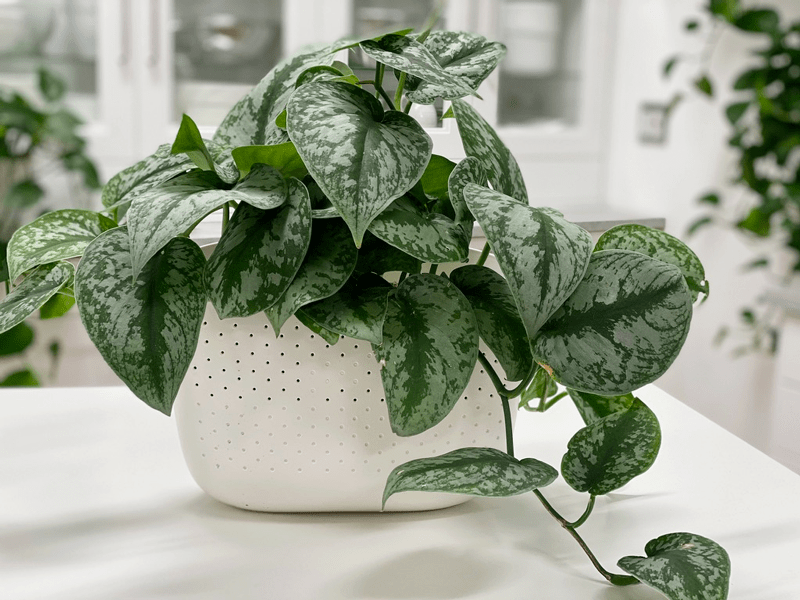
Satin/Silk Pothos
Scindapsus pictus
Also called Silver Pothos or Silk Pothos, this tropical vine is known for its velvety green leaves and silvery markings. Despite its common name, it is not a true pothos in the genus Epipremnum, although its care is similar.
Quick Care
Light: Bright, indirect light
Water: Water when the top 1–2 inches feel dry
Humidity: Average to moderately high
Temperature: Approximately 65–85°F
Difficulty: Easy to moderate
Pet friendly: No
Growth habit: Trailing or climbing vine
Light
Provide bright, indirect light to maintain strong growth and distinct silver markings.
The plant can tolerate medium light, but its growth may slow and the spaces between leaves may become longer. Avoid intense direct afternoon sun, which can scorch or bleach the foliage.
Water
Water when the top 1–2 inches of potting mix feel dry. Thoroughly saturate the soil and allow excess water to drain from the bottom of the container.
Do not leave the pot standing in water. Satin pothos is more susceptible to overwatering than common golden pothos, particularly in low light or during winter.
Curling leaves can indicate thirst, but they can also occur when damaged roots are unable to absorb water. Always check the soil before watering.
Temperature and Humidity
Maintain temperatures between approximately 65°F and 85°F. Protect the plant from cold drafts, exterior doors and temperatures below 55°F.
Average household humidity is usually adequate, but moderate humidity encourages healthier foliage and helps prevent dry, curling leaf edges.
Soil and Repotting
Use a loose, well-draining indoor potting mix. Adding orchid bark and perlite can improve airflow and drainage around the roots.
Repot when roots begin circling the inside of the container or growing through its drainage holes. Select a pot only 1–2 inches wider than the current container.
Fertilizing
Apply a balanced liquid houseplant fertilizer at half strength approximately once a month during spring and summer.
Reduce or stop feeding during fall and winter when growth slows. Excess fertilizer can cause brown leaf tips and mineral buildup in the soil.
Pruning and Training
Trim long or sparse vines just above a leaf node to encourage branching. Stem cuttings containing at least one node can be rooted in water or a moist propagation mix.
Allow the vines to trail from a shelf or hanging container, or train them up a moss pole, plank or trellis. Climbing plants typically produce larger leaves as they mature.
Common Problems
Curling leaves with dry soil: The plant likely needs water.
Yellow leaves and wet soil: Usually caused by overwatering or poor drainage.
Long stems with small leaves: The plant needs brighter indirect light.
Faded silver markings: Often associated with insufficient light.
Brown, crispy edges: May result from very dry soil, low humidity, excess fertilizer or mineral-heavy water.
White cottony patches or webbing: Inspect for mealybugs or spider mites.
Pet Safety
Satin pothos are not considered pet-safe. Its tissues contain insoluble calcium oxalate crystals that can cause oral pain, swelling, drooling, vomiting and difficulty swallowing.
Keep the plant out of reach and contact a veterinarian or pet-poison service if it is chewed or eaten. ASPCA Satin Pothos profile
Mary Mae’s Best Advice
Let the upper portion of the soil dry before watering, and give the plant brighter light than you would give an ordinary golden pothos. Bright indirect light keeps its vines fuller and its silver markings more distinct.
