
Pilea Care Guide
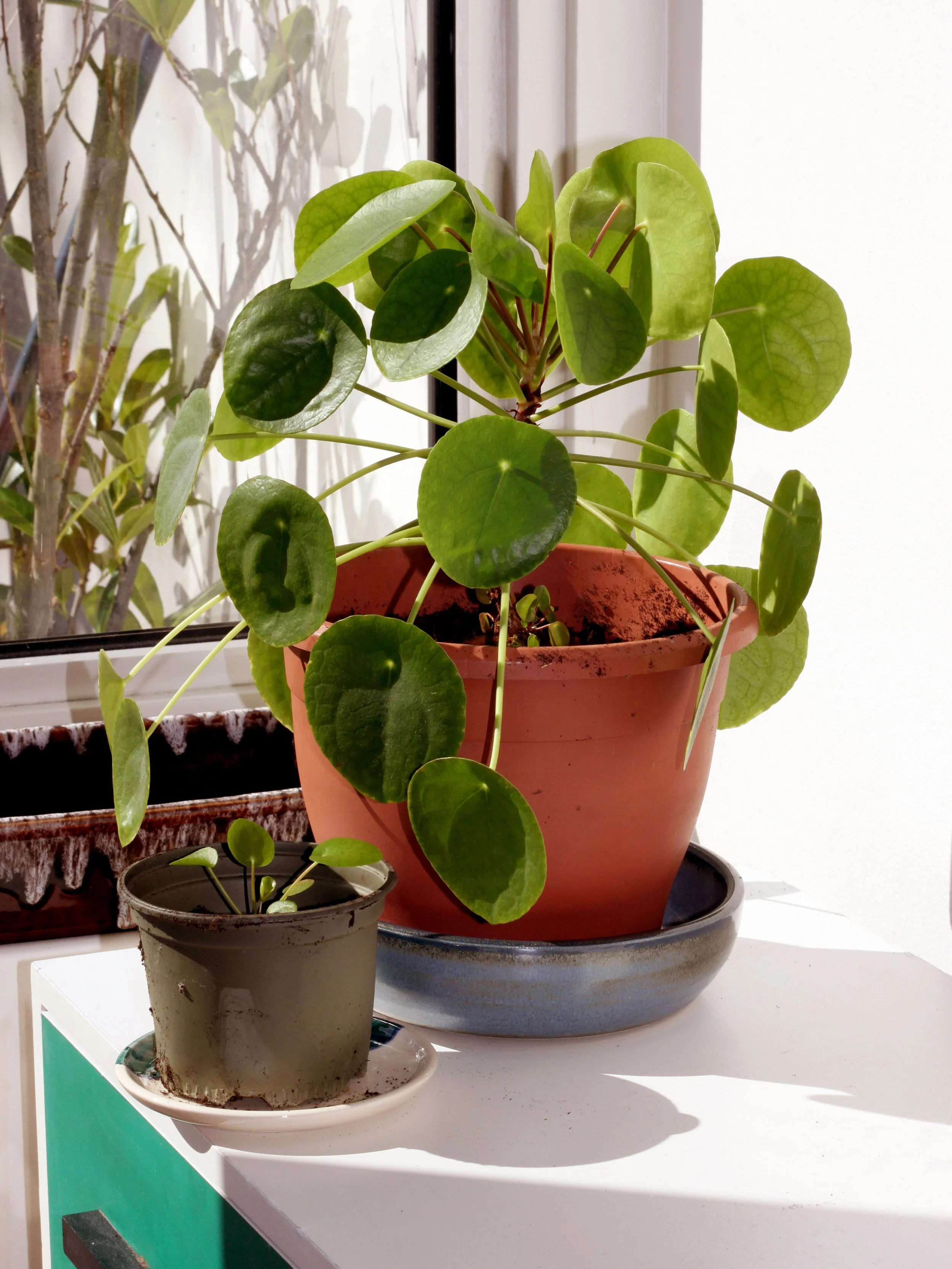
Pilea peperomioides
Also known as the Chinese Money Plant, Coin Plant, or Friendship Plant, Pilea is known for its round leaves and upright growth. It produces small offsets that can be separated and shared as new plants.
Light
Provide bright, indirect light. Gentle morning or late-afternoon sunlight is usually acceptable, but intense afternoon sun may scorch the foliage.
Rotate the container one-quarter turn every week or two because Pileas lean strongly toward their light source.
Too little light can cause:
Long, stretched stems
Smaller leaves
A sparse appearance
Soil remaining wet too long
Water
Water when the top one to two inches of soil feel dry.
Water thoroughly until excess drains from the container, then empty the saucer or decorative pot.
Pilea leaves may begin to droop slightly when the plant is thirsty, but avoid repeatedly allowing the entire root ball to become bone dry. Constantly wet soil can cause yellowing, leaf drop, and root rot.
Reduce watering when growth slows during winter.
Humidity
Average household humidity is generally adequate.
Keep the plant away from heating vents and extreme temperature changes. Moderate humidity can help prevent dry leaf edges, but unusually high humidity is not required.
Temperature
Maintain temperatures between approximately 60 and 80°F.
Protect the plant from:
Temperatures below approximately 50°F
Cold windows and exterior doors
Heating and cooling vents
Sudden temperature changes
Soil and Repotting
Use a loose, well-draining indoor potting mixture.
A suitable mixture can include:
Indoor potting soil or coco coir
Perlite or pumice
Fine orchid bark
Always use a container with drainage holes. Repot when roots have filled the container or the soil begins drying unusually quickly.
Increase the pot by only one size.
Fertilizing
Feed approximately once a month during spring and summer with a balanced houseplant fertilizer diluted to half strength.
Reduce or stop feeding during fall and winter when growth slows.
Offsets and Propagation
Healthy Pileas commonly produce small plants around their base.
Once an offset has developed several leaves and its own roots, it can be carefully separated from the parent plant and placed in a small container with fresh potting mixture.
Offsets can also be left attached to create a fuller plant.
Common Problems
Yellow leaves: Often caused by excessive watering, poor drainage, or natural aging of older foliage.
Curling leaves: May result from excessive light, temperature stress, inconsistent watering, or natural growth.
Drooping leaves: Check whether the soil is dry. Saturated soil and damaged roots can also cause drooping.
Brown spots: May indicate sunburn, physical damage, or watering problems.
Long, leaning growth: Move the plant into brighter indirect light and rotate it regularly.
Spider mites, mealybugs, or fungus gnats: Inspect the foliage and soil regularly.
Pet Safety
Pilea peperomioides is generally considered pet friendly. Pets should still be discouraged from chewing houseplants because any plant material can cause digestive upset.
Mary Mae’s Quick Advice
Give your Pilea bright filtered light, rotate it regularly, and water when the upper portion of the soil dries. Leave its offsets attached for a full plant or separate them once they develop roots.
