
Money Tree Care Guide
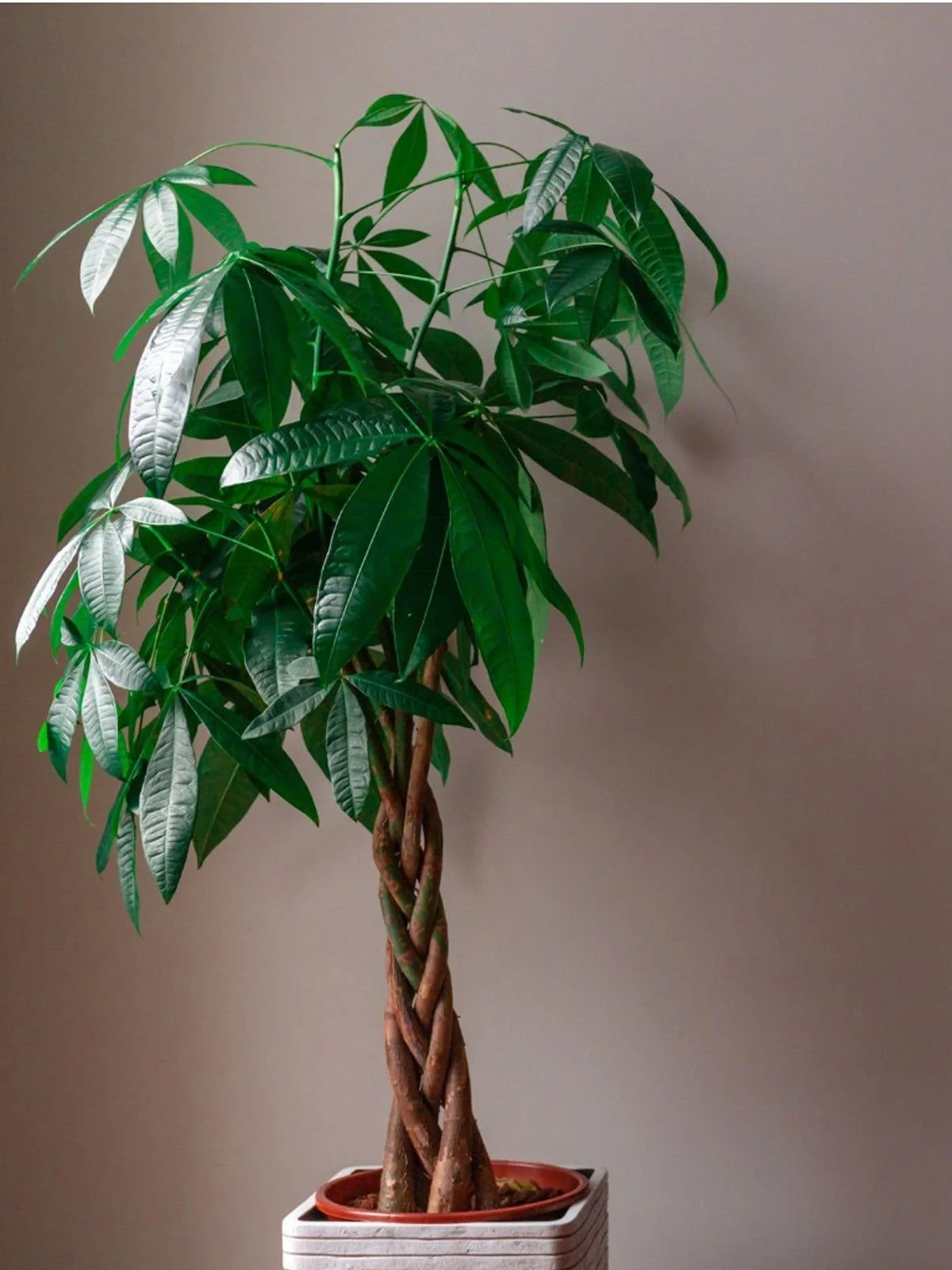
Money Tree
Pachira aquatica
The Money Tree is a tropical plant with glossy, hand-shaped leaves and a distinctive trunk that is often braided by growers. It grows best with bright indirect light, moderate humidity and careful watering.
Quick Care
Light: Bright, indirect light
Water: Water when the top 2–3 inches feel dry
Humidity: Average to moderately high
Temperature: Approximately 65–80°F
Difficulty: Easy to moderate
Pet friendly: Yes—classified as non-toxic
Growth habit: Upright tropical tree
Mature size: Commonly 3–6 feet indoors
Light
Place your Money Tree in bright, indirect light. Gentle morning sun is usually acceptable, but intense afternoon sunlight can scorch the leaves.
The plant can tolerate medium light, although growth may become slower and less balanced. Rotate the container approximately one-quarter turn every week or two to encourage even growth.
Water
Water when the top 2–3 inches of soil feel dry. Thoroughly saturate the potting mix until water drains from the bottom of the container.
Empty all water from the saucer or decorative pot. Money Trees are vulnerable to root rot when left in saturated soil or standing water.
Water less frequently during winter or in lower-light locations. Do not water merely because the plant is scheduled for a particular day—check the soil first.
Temperature and Humidity
Maintain temperatures between approximately 65°F and 80°F. Protect the plant from cold drafts, heating vents, air-conditioning and temperatures below 50–55°F.
Money Trees prefer moderate humidity but can adapt to average household conditions. Very dry air may cause brown leaf edges and increase the risk of spider mites.
Soil and Repotting
Use a loose, well-draining indoor potting mix containing materials such as perlite, bark or coarse sand.
The container must have a drainage hole. Repot when roots begin circling the pot, growing through the drainage holes or causing the soil to dry unusually quickly.
Choose a new container only 1–2 inches wider than the existing one.
Braided-Trunk Care
Braided Money Trees are created by weaving several young trunks together. The trunks do not naturally braid themselves.
Inspect the trunk and soil line for tight bands, wire or tape used during production. Remove or loosen anything that is cutting into the expanding trunks.
Do not continue forcing stiff, mature trunks into a tighter braid because they may crack or become damaged.
Fertilizing
Apply a balanced liquid houseplant fertilizer at half strength approximately once a month during spring and summer.
Reduce or stop feeding during fall and winter. Do not fertilize a dry, overwatered or otherwise stressed plant.
Pruning and Cleaning
Prune long or uneven branches just above a leaf node during active growth. This encourages branching and helps maintain a compact shape.
Remove yellow or damaged leaves with clean scissors. Wipe dust from healthy foliage using a soft, damp cloth.
Propagation
Money Trees can be propagated from healthy stem cuttings, although rooting can take time.
Choose a cutting with several nodes, remove its lowest leaves and place the lower node in water or a moist propagation medium. Provide warmth, humidity and bright indirect light while roots develop.
Common Problems
Yellow leaves with wet soil: Usually caused by overwatering or poor drainage.
Drooping leaves with dry soil: The plant may need water.
Rapid leaf drop: May result from cold drafts, sudden relocation, watering problems or a major change in light.
Brown, crispy edges: Often caused by dry air, prolonged dryness or fertilizer buildup.
Pale or bleached patches: Possible sunburn from intense direct light.
Soft or darkened trunk: May indicate serious rot. Check the roots and soil moisture immediately.
Fine webbing or speckled foliage: Inspect for spider mites.
Pet Safety
The Money Tree is classified by the ASPCA as non-toxic to cats and dogs. However, chewing or eating plant material may still cause nausea, vomiting or loose stool.
Discourage pets from chewing the plant and contact a veterinarian if concerning symptoms develop. ASPCA Money Tree profile
Mary Mae’s Best Advice
The Money Tree’s thick trunk does not mean it should remain wet. Give it bright indirect light, allow several inches of soil to dry and make sure no water collects inside its decorative container. Also check braided trunks for tight production ties before they cause damage.
