
Calathea Care Guide
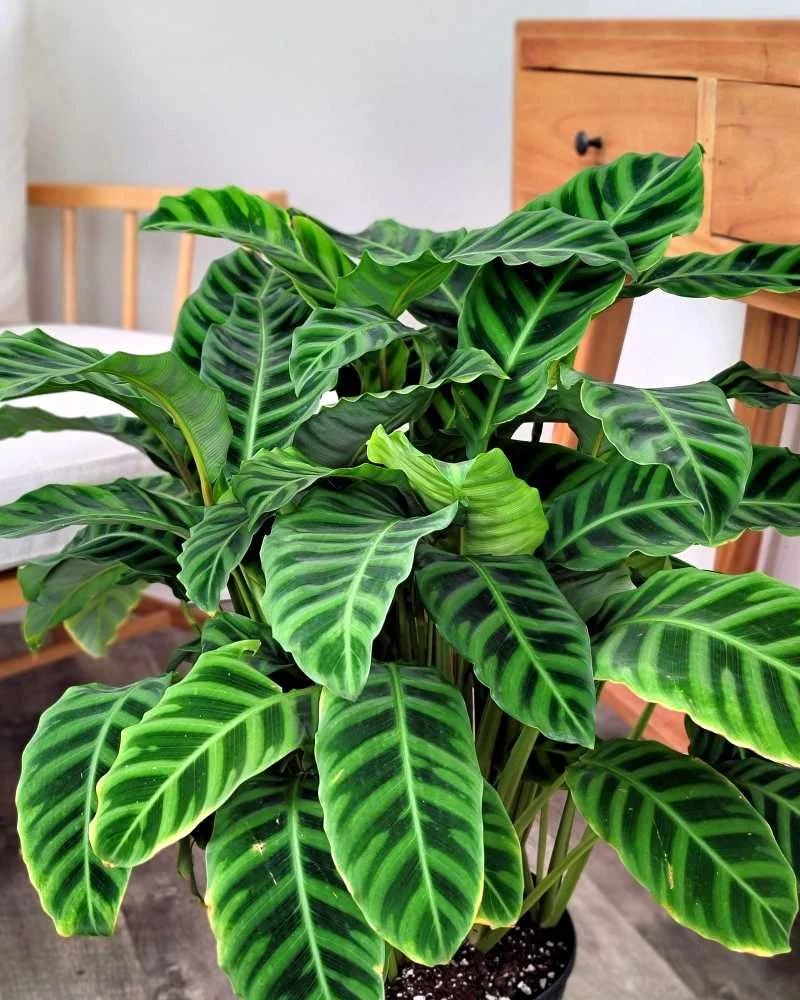
Goeppertia species
Commonly sold under the former genus name Calathea
Calatheas are tropical foliage plants known for their intricate leaf patterns and colorful undersides. This shared guide covers both the Rattlesnake Calathea and Medallion Calathea on your order.
Quick Care
Light: Medium to bright indirect light
Water: Water when the top ½–1 inch begins drying
Humidity: High; approximately 50–60% or greater
Temperature: Approximately 65–80°F
Difficulty: Moderate to challenging
Pet friendly: Yes—non-toxic to cats and dogs
Growth habit: Upright and clumping
Light
Provide medium to bright indirect light. Calatheas naturally grow beneath a tropical forest canopy and do not tolerate intense direct sunlight.
Too much sun can bleach their patterns, curl the leaves or create scorched patches. Insufficient light slows growth and can weaken the plant.
Gentle morning sunlight or filtered light from a bright window is usually suitable.
Water
Water when the top ½–1 inch of soil begins to feel dry. Keep the potting mix consistently moist but never saturated.
Water thoroughly and allow all excess to drain. Do not allow the container to remain standing in water.
Calatheas are sensitive to salts, fluoride and minerals commonly found in tap water. Filtered, distilled or rainwater is recommended, especially if brown leaf tips repeatedly develop.
Reduce watering slightly during winter, but do not allow the root ball to dry completely.
Temperature and Humidity
Maintain temperatures between approximately 65°F and 80°F. Protect the plant from cold drafts, heating vents, air-conditioning and sudden temperature changes.
High humidity is important. Aim for at least 50–60% humidity when possible. A room humidifier is usually more effective than occasional misting.
Provide gentle air circulation without placing the plant in a direct draft.
Soil and Repotting
Use a loose potting mix that retains some moisture while draining freely. A combination of indoor potting soil, perlite and fine orchid bark works well.
The container must have a drainage hole. Repot when roots have filled the container or the potting mix has become compacted.
Choose a new pot only slightly larger than the existing container. An oversized pot can remain wet too long and cause root problems.
Fertilizing
Apply a balanced liquid houseplant fertilizer at approximately half strength once a month during spring and summer.
Reduce or stop fertilizing during fall and winter. Calatheas are sensitive to fertilizer salts, so more fertilizer is not better.
Periodically water deeply enough to flush accumulated minerals from the potting mix.
Cleaning and Propagation
Remove yellow or badly damaged leaves near the soil line with clean scissors.
Wipe dust gently from the foliage with a soft, damp cloth. Avoid commercial leaf-shine products.
Calatheas are best propagated by carefully dividing established plants during repotting. Each division should retain healthy roots and several leaves.
Normal Leaf Movement
Calathea leaves may rise, lower or reposition themselves throughout the day and night. This natural movement is normal for members of the prayer plant family.
Check the soil before watering rather than assuming that every change in leaf position indicates thirst.
Variety Notes
Rattlesnake Calathea
Goeppertia insignis
Formerly Calathea lancifolia
This variety has long, narrow, wavy leaves with dark green markings and purple undersides. It prefers consistently moist soil, high humidity and protection from direct sun.
Medallion Calathea
Goeppertia roseopicta ‘Medallion’
Formerly Calathea roseopicta ‘Medallion’
Medallion has broad, rounded leaves with feathered green and silver patterning and deep purple undersides. Its broad leaves make humidity and consistent watering especially important.
Common Problems
Brown, crispy edges: Commonly caused by dry air, inconsistent watering, mineral-heavy water or fertilizer buildup.
Curling leaves: May indicate dry soil, low humidity, cold drafts, excessive sunlight or damaged roots.
Yellow leaves with wet soil: Usually caused by overwatering or poor drainage.
Faded leaf patterns: Often associated with excessive direct sunlight.
Leaves remaining tightly curled: Check for severe dryness, cold exposure, pests or root problems.
Fine webbing or pale speckling: Inspect for spider mites, especially during dry winter conditions.
Pet Safety
Calatheas are classified by the ASPCA as non-toxic to cats and dogs. Eating any plant material may still cause mild stomach upset, so chewing should be discouraged. ASPCA Calathea profile
Mary Mae’s Best Advice
Calatheas need consistency more than anything else. Keep them warm, maintain moderate-to-high humidity and use filtered or distilled water if brown edges persist. They are pet-friendly, but they are not the best choice for someone who regularly forgets to water.
