
Bird of Paradise Care Guide
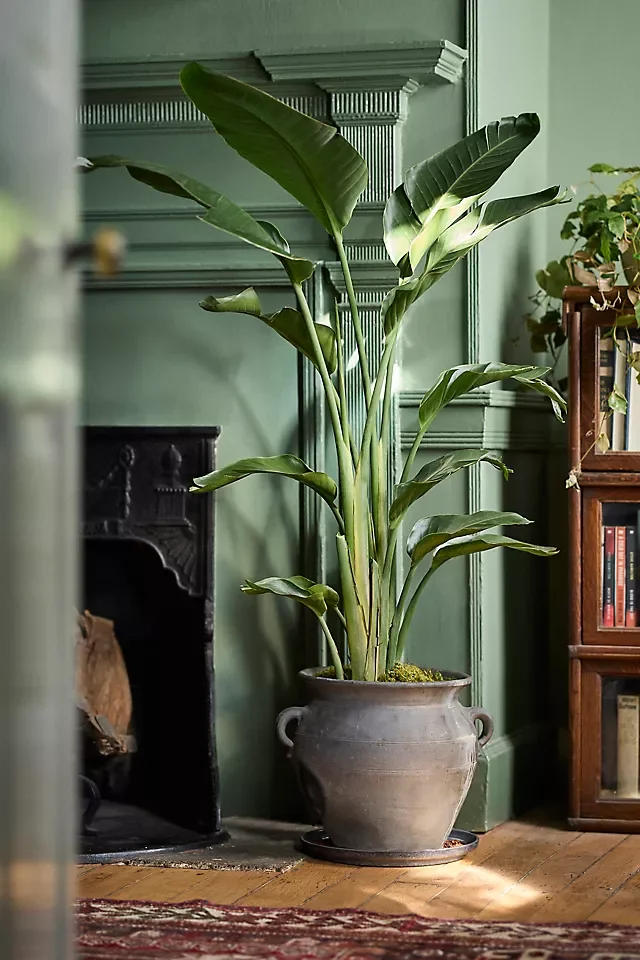
Bird of Paradise
Strelitzia reginae, Strelitzia nicolai and related species
Bird of Paradise is a tropical plant with large, banana-like leaves and an upright, architectural growth habit. This guide covers both the orange-flowering Bird of Paradise and the larger White Bird of Paradise commonly grown indoors.
Quick Care
Light: Very bright light with some direct sun
Water: Water when the top 1–2 inches feel dry
Humidity: Average to high
Temperature: Approximately 65–85°F
Difficulty: Moderate
Pet friendly: No
Growth habit: Upright and clumping
Mature size: Varies significantly by species
Light
Place your Bird of Paradise in one of the brightest locations available. It grows best with very bright indirect light and several hours of direct sunlight.
Introduce direct sun gradually to prevent leaf scorch. A south- or west-facing window is usually appropriate once the plant has acclimated.
Insufficient light causes slow growth, weak stems and little chance of flowering.
Water
Water when the top 1–2 inches of soil feel dry. Saturate the potting mix thoroughly and allow all excess water to drain.
Bird of Paradise prefers more consistent moisture during spring and summer but should never remain in soggy soil.
Allow it to dry somewhat more during winter, when growth slows. Do not leave water standing inside a saucer or decorative container.
Temperature and Humidity
Maintain temperatures between approximately 65°F and 85°F. Protect the plant from cold drafts, sudden temperature changes and temperatures below 50–55°F.
Moderate humidity is beneficial, especially when new leaves are developing. Brown edges can appear in extremely dry indoor air.
Soil and Repotting
Use a fertile, well-draining indoor potting mix containing materials such as perlite, coarse sand or orchid bark.
Bird of Paradise develops a substantial root system and can become top-heavy. Use a sturdy container with drainage holes.
Repot when the roots have thoroughly filled the container or begin lifting the plant upward. Choose a new pot only 1–2 inches wider than the existing one.
Fertilizing
Apply a balanced liquid houseplant fertilizer approximately once a month during spring and summer.
Reduce or stop feeding during fall and winter. Do not fertilize extremely dry soil or a stressed plant.
Leaf Care and Pruning
Wipe the large leaves periodically with a soft, damp cloth to remove dust.
Remove badly damaged or yellow leaves by cutting the complete leaf stalk near the soil line. Do not cut into the central emerging spear.
Bird of Paradise leaves naturally split along their veins. This allows wind to pass through the foliage in their native environment and is not necessarily a sign of poor health.
Low humidity, handling and air movement can increase splitting.
Flowering Expectations
Bird of Paradise plants must mature before flowering. Even under excellent conditions, they may require several years to bloom.
Indoor plants often do not receive enough direct light to flower. White Bird of Paradise is primarily grown indoors for its foliage and may never bloom inside a typical home.
A lack of flowers does not mean the plant is unhealthy.
Variety Notes
Orange Bird of Paradise
Strelitzia reginae
This smaller species commonly reaches approximately 3–6 feet and produces orange-and-blue flowers when mature and grown in strong light.
White Bird of Paradise
Strelitzia nicolai
This larger species can become a substantial indoor floor plant with very large leaves. It requires generous space, strong light and a sturdy container.
Common Problems
Curling leaves: May indicate dry soil, low humidity, cold stress or root problems.
Yellow lower leaves: Individual older leaves naturally decline, but widespread yellowing may indicate overwatering.
Brown, crispy edges: Often caused by dry air, inconsistent watering or mineral buildup.
Split leaves: Usually natural, although low humidity and physical damage can worsen splitting.
Leaning growth: Rotate the plant regularly and provide stronger light.
No new growth: The plant may need brighter light, warmth or additional time during winter dormancy.
Fine webbing, white cottony patches or brown bumps: Inspect for spider mites, mealybugs or scale.
Pet and Child Safety
Bird of Paradise plants are not considered pet-safe. Ingestion can cause nausea, vomiting and drowsiness. The fruits and seeds of Strelitzia reginae are considered the most toxic portions, but pets should not be permitted to chew any part of the plant.
Keep the plant out of reach and contact a veterinarian or pet-poison service if it is eaten. ASPCA Bird of Paradise Flower profile
Mary Mae’s Best Advice
Bird of Paradise needs significantly more light than many tropical houseplants. Place it near your brightest window, rotate it regularly and do not panic when the leaves split—that is a normal characteristic of the plant.
