
Alocasia ‘Ninja’ Care Guide
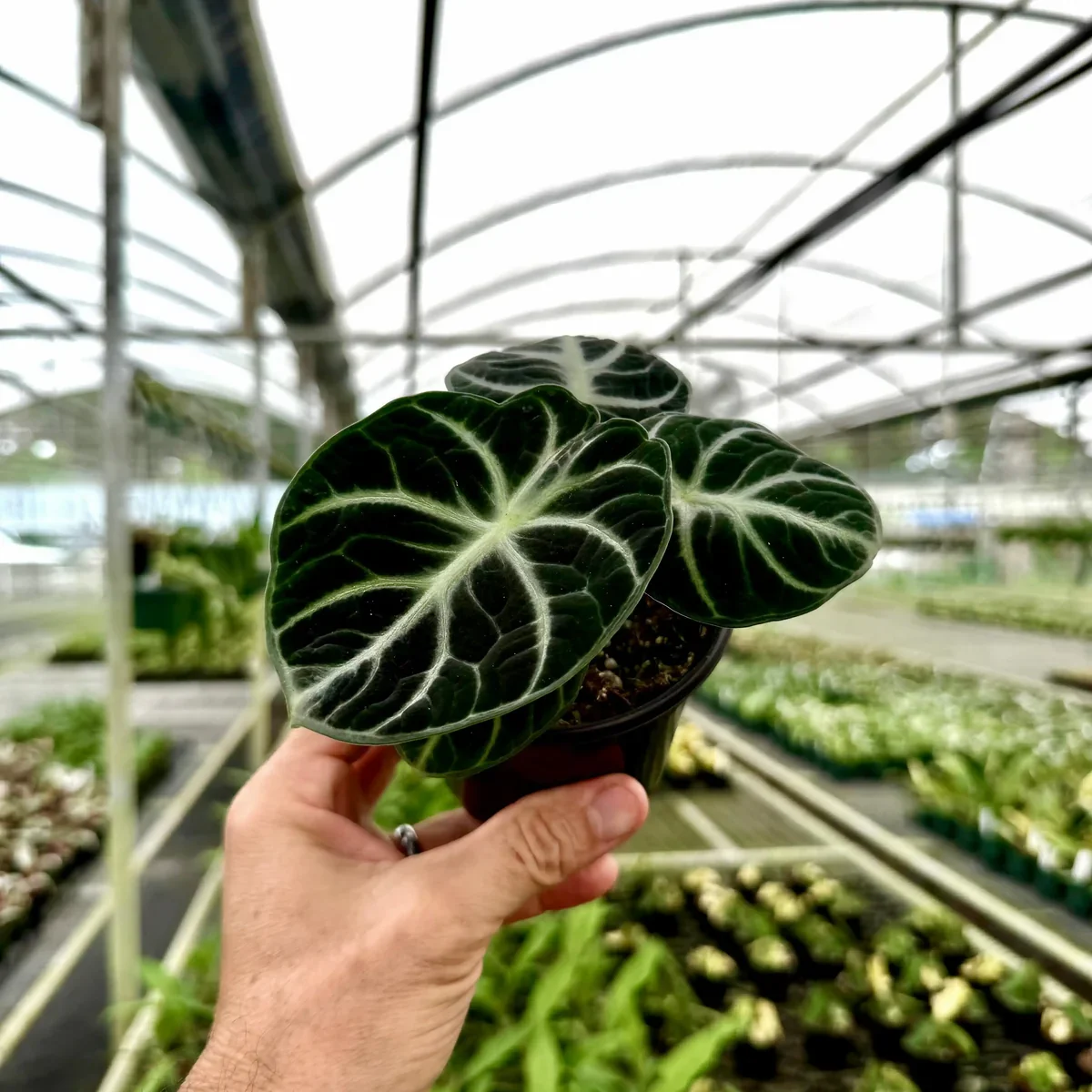
Alocasia ‘Ninja’
Alocasia ‘Ninja’ is a compact jewel-type Alocasia with dark, velvety leaves and prominent pale veins. It resembles Black Velvet Alocasia but develops rounder, heavily textured foliage. It requires warmth, humidity, bright indirect light and particularly careful watering.
Quick Care
Light: Bright, indirect light
Water: Water when the top 1–2 inches feel dry
Humidity: High; ideally 60% or greater
Temperature: Approximately 65–85°F
Difficulty: Moderate to challenging
Pet friendly: No
Growth habit: Compact, upright and corm-forming
Light
Provide bright, indirect light. Gentle morning sun may be acceptable, but intense afternoon sunlight can scorch or bleach the dark foliage.
Insufficient light slows growth and causes the potting mix to remain wet longer, increasing the risk of root and corm rot.
Water
Water when the top 1–2 inches of potting mix feel dry. Saturate the soil thoroughly and allow all excess water to drain.
Alocasia ‘Ninja’ prefers consistent moisture but should never remain in saturated soil. Jewel Alocasias are especially susceptible to rot in dense, poorly drained potting mixes.
Reduce watering during winter or any period when the plant stops actively producing leaves. Check the soil rather than following a fixed schedule.
Filtered, distilled or rainwater may help prevent brown leaf edges if your tap water contains high levels of minerals.
Temperature and Humidity
Maintain temperatures between approximately 65°F and 85°F. Keep the plant away from cold windows, exterior doors, heating vents and air-conditioning.
High humidity is important, ideally around 60% or greater. A room humidifier or enclosed plant cabinet is more effective than occasional misting.
Avoid leaving the velvety foliage continuously wet, and provide gentle air circulation to reduce fungal problems.
Soil and Repotting
Use a very airy, fast-draining aroid mixture. A combination of indoor potting soil or coco coir, perlite or pumice and fine orchid bark works well.
The container must have drainage holes. Avoid oversized pots, which can retain excessive moisture around the small root system and corm.
Repot when the roots have filled the container or the growing medium has become compacted.
Fertilizing
Apply a balanced liquid houseplant fertilizer at approximately one-quarter to one-half strength every four weeks during active spring and summer growth.
Reduce or stop feeding during winter or dormancy. Do not fertilize a plant that has damaged roots or no active growth.
Dormancy and Leaf Loss
Alocasias can slow significantly or enter dormancy during winter, particularly when light and temperature decrease.
The plant may stop producing leaves or lose some or all of its foliage while its underground corm remains alive. Reduce watering during this period, keep the plant warm and avoid leaving the dormant corm in wet soil.
New growth may resume when warmth and brighter light return.
Guttation
Small droplets of water sometimes appear at the tips or edges of Alocasia leaves after watering. This process, called guttation, is generally normal.
Frequent heavy dripping may indicate that the soil is remaining too wet. Protect furniture and flooring because the droplets may contain minerals or plant compounds.
Propagation
Alocasia ‘Ninja’ is best propagated by separating offsets or small corms during repotting.
Each division should retain healthy roots or a viable corm. Leaf or stem cuttings will not produce a new Alocasia plant.
Common Problems
Yellow leaves with wet soil: Usually caused by overwatering, poor drainage or root damage.
Curling or crispy leaf edges: May indicate low humidity, dry soil, mineral-heavy water or root problems.
Soft corm or foul-smelling roots: Indicates rot. Remove damaged tissue and repot into fresh, airy mix.
Sudden leaf loss: Can result from cold temperatures, damaged roots, severe dryness or seasonal dormancy.
Faded or scorched patches: Usually caused by excessive direct sunlight.
Fine webbing or pale speckling: Inspect carefully for spider mites, a common Alocasia pest.
Pet and Child Safety
Alocasias are not considered pet-safe. Their leaves and stems contain insoluble calcium oxalate crystals that can cause oral burning, swelling, drooling, vomiting and difficulty swallowing.
The sap may also irritate sensitive skin. Wash your hands after handling damaged plant tissue and keep the plant out of reach of pets and young children.
Contact a veterinarian or pet-poison service if the plant is chewed or eaten. ASPCA Alocasia profile
Mary Mae’s Best Advice
Alocasia ‘Ninja’ needs moisture, but it also needs air around its roots. Use a chunky potting mix, a small container with drainage and high humidity. If it loses leaves in winter, do not compensate by adding more water—the corm may simply be resting.
